SEO strategy framework: Building search visibility on a 6-month timeline

Search engine optimization (SEO) has been around long enough that most of us have picked up something along the way. You know about keywords, backlinks, meta descriptions, maybe even a plugin or two. You’ve probably tried a few things: optimized a page title, published some blog posts with search in mind, wondered if any of it was working. And now, with AI reshaping how search results look and everyone talking about showing up in ChatGPT and Google’s AI answers, there’s even more to keep up with.
So you’re doing SEO things. You’re just not sure if they add up to anything.
That’s the difference between doing SEO tasks and having an SEO strategy. A strategy tells you what to do first, what to skip, and what progress looks like before your rankings move. Without one, it’s easy to spend hours on things that don’t compound — and give up right before results start showing.
This guide gives you a practical, six-month framework you can follow without an agency or a dedicated SEO team. What to do, in what order, what to stop, and what early signals mean it’s actually working.
Key takeaways:
- An SEO strategy tells you what to do first, what to skip, and what progress looks like before rankings move.
- Fix the technical foundation before anything else. Slow load times, crawl errors, and indexing issues will undermine even the best content and backlink work.
- Keyword research in 2026 means thinking in topic clusters, not individual keywords. Check whether Google is already answering a query with an AI Overview before targeting it.
- Search intent beats keyword placement. Matching your content format and depth to what the searcher actually expects matters more than hitting a keyword in the right spots.
- Track the right metrics at the right stage. Impressions and indexing in months 1–2, keyword positions in months 3–4, traffic and page performance in months 5–6.
The 4 types of SEO that form a complete strategy
Before diving into the strategy, it helps to get clear on what SEO actually covers and what its components are. There are four types of SEO, and a solid strategy touches all of them: on-page optimization, off-page optimization, technical SEO, and local SEO. Here’s a quick breakdown.
On-page SEO
On-page SEO is the practice of optimizing the content and HTML elements on your individual pages, so search engines understand what each page is about and rank it accordingly:
- Title tags
- Meta descriptions
- Headings, internal links
- The words you use
In plain terms: it’s what you do directly on your pages to make them easier to find. If you’ve ever rewritten a page title to include a keyword, added headers to break up a wall of text, or linked from one blog post to another: that’s on-page SEO.

Off-page SEO
Off-page SEO refers to everything that builds your site’s authority and reputation outside of your own pages: primarily backlinks from other websites, but also brand mentions, digital PR, and how your site is referenced across the web.
Off-page SEO is the word-of-mouth marketing channel for search engines. When a reputable site links to yours, it’s essentially vouching for your content. The more credible those sources are, the more trustworthy your site looks to Google.
Technical SEO
Technical SEO covers the backend factors that determine whether search engines can properly crawl, index, and rank your site:
- Page speed
- Mobile performance
- Core Web Vitals
- Website structure
- Crawlability
It’s the foundation everything else sits on. You can have excellent content and strong backlinks, but if your site loads slowly or has indexing issues, search engines may never surface it. That’s why technical SEO isn’t a one-time fix; it’s something worth revisiting at every stage of your strategy.
Local SEO
Local SEO is the process of optimizing your online presence to appear in location-based searches. Think “coffee shop near me” or “plumber in Austin.” It involves optimizing your Google Business Profile, building local citations, and keeping your name, address, and phone number consistent across directories.
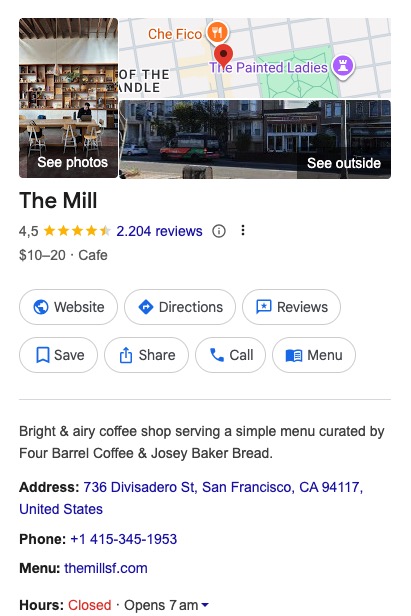
If you run a local business or serve customers in a specific area, this is the type of SEO that gets you in front of people who are ready to buy, not just browsing.
Now that you know what each layer covers, here’s how to put them together into a plan that gives you clarity, direction, and a clear sense of what to do next.
How to build an effective SEO strategy step by step
To build your SEO strategy effectively, you need to cover all the bases: technical health, keyword research, content, authority, and tracking. Here’s how to work through each one.
Step 1: Audit your site and fix the foundation
Before you do anything else, you need to know where you stand. An SEO audit tells you what’s working, what’s broken, and what’s holding your site back before you invest time in content or link building.
Start with the basics and work through this SEO checklist:
- Google Search Console: go to the Index section and check Coverage for crawl errors and excluded pages; check the Manual Actions report to confirm there are no penalties against your site.
- Core Web Vitals: in Search Console, go to Experience → Core Web Vitals. You’re looking at three scores: LCP (how fast your main content loads, should be under 2.5s), INP (how quickly the web page responds to clicks and interactions), and CLS (how much the page layout shifts while loading). Google flags URLs that need improvement directly in the report. If your scores are consistently poor, your hosting may be part of the problem — server response time is one of the first things Google measures, and SiteGround’s SuperCacher and SiteGround CDN are designed to keep it in check.
- Broken links and duplicate meta descriptions: use a free tool like Screaming Frog (crawls up to 500 URLs for free) or Ahrefs Webmaster Tools: both flag broken internal links, missing titles, duplicate or missing meta descriptions, and redirect chains in one scan. Once the crawl is done, export the issues list and work through it page by page. Fix broken links by updating the URL or removing the link entirely. Write a unique meta description for every page that’s missing one — no two pages should share the same description. And clean up any redirect chains: these happen when a URL redirects to another URL that redirects again, rather than going straight to the final destination. The fix is simple — make every redirect go directly to the final page in one step.
- Mobile-friendliness: run your URL through Google’s Mobile-Friendly Test or check the Mobile Usability report in Search Console for a site-wide view.
None of this is glamorous work, but it’s the layer everything else depends on. Fixing foundation issues in month one means your content and keyword work in months two and three actually lands.
How long does it take? Set aside 3–4 hours in week one to run the initial audit. From there, budget 4–5 hours per week for ongoing technical fixes — the timeline depends on how many issues you find. Plan to re-run the audit every 2–3 months to catch anything new before it compounds.
Step 2: Do your keyword research
Keyword research in 2026 looks different from what it did a few years ago. And if the pace of change in search tells us anything about the future of SEO, it’s that relying on search volume alone gives you an increasingly incomplete picture.
What hasn’t changed:
- Keyword intent still drives everything. Understanding whether someone is looking to learn, compare, or buy is still the foundation of good keyword research. Getting it wrong still means ranking for the wrong audience
- Long-tail keywords with clear intent still work well. A new site has no business chasing a highly competitive keyword like “email marketing,” but “email marketing strategy for small online stores” is a different story. It’s more granular, which means less competition, a more specific audience, and a much higher chance of ranking and converting
- Keyword difficulty still matters. Speaking of, targeting relevant keywords your site can realistically compete for, based on your current domain authority, is still one of the most important calls you make early on
What’s changed:
- AI Overviews now answer a large portion of informational queries directly in search results, which means high-volume, generic keywords often generate impressions without clicks. Before targeting a keyword, check whether Google is already answering it with an AI Overview. And think about what optimizing for AI Overviews actually means in practice: can your content add something the summary doesn’t? A specific example, a personal perspective, a tool recommendation, a comparison. If not, it might not be worth targeting at all.
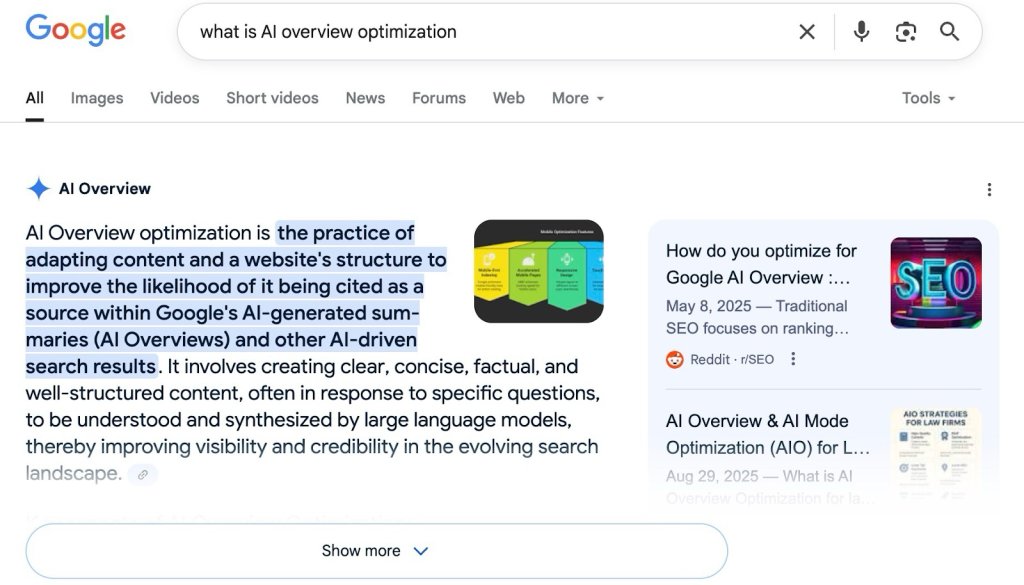
- Think in topic clusters, not individual keywords. Instead of optimizing one page per keyword, build a content structure where a core page covers the broad topic and supporting pages go deeper on specific angles. This signals topical authority to search engines, and increasingly, to AI models deciding which sources to cite.
Reddit, Quora, and niche forums are underrated keyword research sources. The way real people phrase questions in these communities often reveals intent more clearly than any keyword tool does, and frequently surfaces long-tail angles you wouldn’t think to search for yourself.
For the actual research, start with free tools:
- Google Search Console shows you what you’re already ranking for and which pages are getting impressions
- Google’s autocomplete and People Also Ask surface how your audience phrases their searches and what related questions they’re asking
- AI Overviews show you how much of the results page Google is already answering itself, which helps you decide whether a keyword is worth targeting at all
- Ahrefs Webmaster Tools or Semrush’s free tier give you keyword volume and difficulty data to help prioritize your list
How much time should you set aside? 3–4 hours to build your initial keyword list and cluster it by topic. Revisit quarterly as search behavior shifts.
Step 3: Match every page to search intent
Search intent is the real goal behind a search query: what someone actually wants to find when they type something into Google. It sounds simple, but it’s one of the most overlooked reasons pages don’t rank despite being well-written and properly optimized.
Google’s job is to return the most relevant result for a query, and relevance isn’t just about keywords. It’s about format, depth, and purpose. If someone searches “best project management tools,” they want a comparison list, not a definition of project management. If someone searches “how to write a meta description,” they want a short tutorial, not a 3,000-word guide. When your content type doesn’t match what the searcher expects, Google won’t rank it, even if the keyword is there.
There are four types of search intent worth knowing:
- Informational: the person wants to learn something (“how does SEO work”)
- Navigational: they’re looking for a specific site or page (“Semrush login”)
- Commercial: they’re researching before a decision (“best SEO tools for small business”)
- Transactional: they’re ready to act (“buy SEO audit template”)
Whether you’re optimizing an existing page or creating something new, run through the same checklist before you publish or update:
- Search the keyword yourself first. Look at what’s already ranking: the format, the depth, the angle. That’s Google showing you what it considers the right answer. Use it as your starting point, then find a way to cover the topic better, more specifically, or from a fresher angle.
- Match the content format to the intent. A commercial keyword needs a comparison or review format; an informational one needs a clear, educational answer structured around the question being asked.
- Place your primary keyword in the title, H1, and first paragraph: these are the signals Google weighs most heavily when determining what a page is about. That said, natural always wins over precise: if forcing the keyword makes the sentence awkward, rewrite it until it fits. Stuffing keywords where they don’t belong hurts more than it helps.
- Answer the question fully, but don’t pad. Cover everything the searcher needs: supporting questions, common misconceptions, next steps without stretching it. If someone has to Google a follow-up after reading your page, that’s a gap worth closing.
- Add internal links to related pages on your site. If you mention something you’ve covered in depth elsewhere, point to it. Use descriptive anchor text that tells both the reader and Google what the linked page is about. Avoid “Click here.” It tells no one anything.
How long will this take? Writing a new page from scratch typically takes 3–6 hours depending on the topic and depth. Using AI tools can speed this up significantly. SiteGround AI Studio gives you access to AI writing and content capabilities directly from your hosting dashboard, so you’re not jumping between separate tools. Here are some ChatGPT prompts for marketing to get you started). For updates, it depends on what the page needs: a few tweaks to a title tag and meta description might take 20 minutes, while a full refresh with new keyword research and competitor analysis can take 2–3 hours. Let the data guide the effort, as not every page needs the same treatment.
Step 4: Build a content plan
Once your existing pages are in good shape, it’s time to plan what comes next. A content plan is a decision in advance about what you’ll publish, when, and why, grounded in your business goals, your audience’s questions, and where they are in their decision.
Map your keyword clusters to the customer journey:
- Awareness-stage content educates (how-to guides, explainers),
- Consideration-stage content helps people evaluate (comparisons, case studies), and
- Decision-stage content converts (testimonials, product-focused guides).
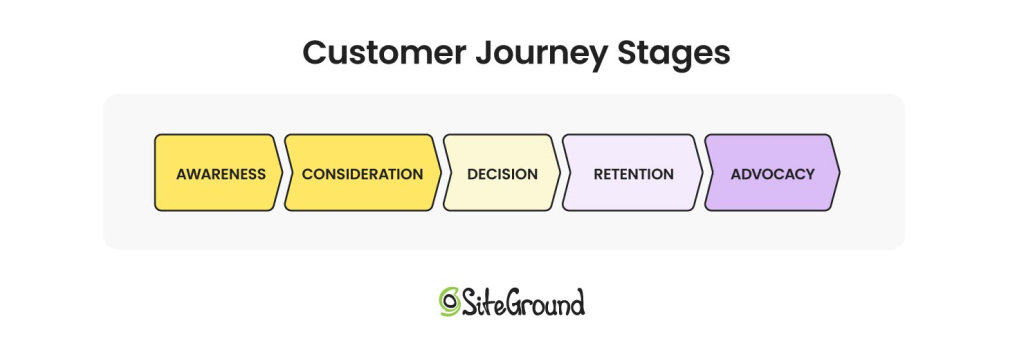
This tells you what format each piece needs, not just what topic to cover.
Here’s how to build your content plan:
- Map each keyword cluster to a journey stage: think about where each topic sits in your reader’s decision process — are they just discovering the problem, weighing their options, or ready to act? You can also flip it: decide which stage you want to address first, then go back to your keyword research and find the terms people use at that stage. Either way, the stage tells you the format: a “what is” keyword needs an explainer, a “best X for Y” keyword needs a comparison, a “buy” or “hire” keyword needs a conversion-focused page.
- Set a realistic publishing cadence: look at your actual schedule and decide how many hours per week you can reliably dedicate to content. One solid piece per week is a good target for most solo operators; one every two weeks is better than burning out and going quiet
- Build a simple editorial calendar: a spreadsheet works fine. For each piece, note the working title, target keyword, journey stage, content format, planned publish date, and status. The goal is to have the next 6–8 weeks mapped out before you start writing anything, so you’re never staring at a blank brief wondering what to work on next
- Plan for content updates alongside new pieces: go back to Search Console, find pages sitting on page two or three, and add them to your calendar for a refresh. A targeted update on a page Google already knows about can move faster than a brand new piece starting from scratch
Once you publish, building an email list is the fastest way to get new content in front of people who already trust you. Real readers who spend time on your page and come back to it send Google early signals that the content is worth ranking, which matters most in the first few weeks when a new page has no track record yet. If you’re hosting with SiteGround, Email Marketing is built into the same Client Area as your site management tools, so you can set up and send email campaigns without adding another platform to your workflow.
Improve Your Email Campaigns with SiteGround!
Want your emails to reach more people? Try SiteGround Email Marketing. With an average delivery rate of 98.8%, your emails will land in your subscribers' inboxes. 
Writing for search engines and AI:
Building your content plan around readers who genuinely engage matters more in 2026 than it ever has, because those same traits that make high-quality content worth reading are exactly what determines whether AI models cite you as a source.
And this is important, because search behavior has shifted. A growing number of people now get their answers directly from AI-generated summaries without clicking through to any website at all. That means ranking isn’t always enough anymore; you need to be the source those summaries pull from. This is the foundation of Generative Engine Optimization (GEO) and why your content strategy in 2026 needs to account for both.
How long does it take? Building a 3-month content calendar takes anywhere from 4–5 hours for a solid first draft to up to a day or two if you’re going deep on keyword research, competitor analysis, and journey mapping. Budget writing time separately on top of that.
Step 5: Earn links and mentions worth having
Backlinks remain one of the strongest ranking signals Google uses, but the way you build them has changed. If you’ve ever gone down the rabbit hole of link directories and mass guest posting hoping to rack up numbers, you already know it doesn’t quite work that way. What actually makes the difference is relevance and editorial merit. Pages ranking first have 3.8 times more backlinks than pages in positions 2–10, according to SEOmator, and those are editorially earned links from credible, relevant sources, not directory submissions.
What still works:
- Digital PR: getting quoted or featured in relevant publications and news coverage.If a journalist references your business or cites your data, that’s the kind of link that actually impacts your rankings. It takes time to build, but responding to relevant requests is a realistic starting point, even for a small site
- Creating genuinely useful resources: original research, detailed guides, free tools. These attract links naturally because other sites want to reference them. Think about what you know that others in your space don’t, and turn it into something concrete and shareable
- Guest contributing to relevant publications: not mass guest posting for links, but writing for outlets your audience actually reads. Identify two or three publications your ideal reader trusts and pitch a specific, relevant angle, not a generic offer to “write content”
- Building relationships with other site owners in your niche: collaborations, co-authored content, and genuine community presence all generate mentions over time. Show up consistently in the same spaces your peers do: comment thoughtfully, share their work, make yourself known before you need anything
What’s worth adding to your radar in 2026:
- Unlinked brand mentions: when someone references your business or content without linking to you, that’s a low-effort outreach opportunity. Set up Google Alerts or Ahrefs Alerts for your brand name, find the mentions, and send a short, friendly email asking if they’d be happy to add a link. Most people will
- AI citation signals: mentions across the web, even without links, contribute to the kind of authority AI models use when deciding which sources to cite. This is where the N-E-E-A-T framework comes in: Notability, Experience, Expertise, Authoritativeness, and Trustworthiness. It’s not enough to be credible; you need to be notable. Answer questions in relevant forums and communities, share original data or opinions on LinkedIn, get featured in podcasts or newsletters in your space, and make sure your author credentials are visible on every page you publish. The more your name and brand show up in credible contexts, the more likely AI models are to recognize you as a reliable source
What no longer works: low-quality link directories, mass guest posting, and private blog networks. These are either ignored or actively penalized.
Don’t expect overnight results: link building is one of the slowest-moving parts of SEO. Set aside 2–3 hours per week for outreach and relationship building. Small and steady is the right pace here.
Step 6: Track the right signals at the right time
SEO results don’t show up on a straight line, and one of the most common reasons people abandon a strategy that’s actually working is checking the wrong digital marketing metrics at the wrong stage.
Here’s what to watch and when:
| Timeframe | What to check | Where to find it | What it means |
| Months 1–2 | Indexing activity | Search Console → Coverage | Are your pages being picked up at all? |
| Crawl frequency | Search Console → Settings → Crawl Stats | Is Google visiting your site more often? | |
| Impression growth | Search Console → Performance → Impressions | Your pages are appearing in results — clicks come later | |
| Months 3–4 | Keyword positions | Search Console → Performance → Average Position | Pages you’ve optimized should start moving up |
| Click-through rate | Search Console → Performance → CTR | Impressions growing but clicks flat? Rewrite your title tags and meta descriptions | |
| Months 5–6 | Traffic by page | Google Analytics → Pages and Screens | Which content is gaining traction and which needs another pass |
| Pages stuck on page two | Search Console → Performance → filter by position 11–20 | These are your priority updates for the next content cycle |
One thing worth keeping in mind: SEO compounds. The work you did in month one is still accumulating value in month six and beyond.
Make it a habit: Block one hour per week to check Search Console and Analytics, and set a recurring monthly review to step back, assess what’s working, and adjust your plan for the next cycle.
What no longer works in 2026
You’ve probably tried at least one of these. Most people have.
Here’s the full list in one place: bookmark it, print it out, do whatever works; just stop doing these things.
- Keyword stuffing: Google understands context. Write naturally and cover the topic thoroughly instead
- Link directories and low-quality backlinks: irrelevant or low-quality links are discounted at best, a penalty risk at worst
- Chasing high-volume keywords with a new site: if the top-ranking pages have a domain rating of 70+ and yours is at 15, no amount of good content will bridge that gap yet
- Creating content purely for links: thin content built around an SEO tactic rather than a real reader rarely ranks, and with AI-generated content flooding the web, quality filters are only getting sharper
- Ignoring search intent: optimizing for a keyword without matching the format and depth the searcher expects means you’re competing for the wrong thing
- Treating AI visibility as an afterthought: if you’re not writing with AI citation in mind from the start, you’re already behind where search is heading
- Inconsistent publishing: sporadic content followed by long silences undermines the topical authority you’re trying to build. A modest but consistent cadence beats occasional bursts every time
- Skipping the technical foundation: no content strategy compensates for a slow, poorly structured, or poorly indexed site
Six months from now, you’ll wish you started this SEO strategy today
SEO is one of those things that always feels like something you’ll get serious about next month. And then next month comes, and you’re still publishing the occasional blog post and hoping for the best.
The good news: you don’t need to overhaul everything overnight. You need a plan, a few hours a week, and the discipline to keep going through month two and three when nothing seems to be happening — because that’s exactly when it’s working, just not visibly yet.
Fix your foundation. Target keywords you can actually compete for. Create content people and AI models both want to cite. Build links worth having. Track the right things at the right time. That’s it. No agency, no magic tool, no secret tactic that everyone else knows and you don’t.
Start with step оne this week. Six months from now, you’ll have a site that works harder than it does today and you’ll wish you’d started sooner.
SiteGround web hosting is built to handle the performance side of SEO out of the box:
- Fast server response times
- Built-in caching
- CDN that keeps your Core Web Vitals in shape
You can focus on the strategy, not the infrastructure. Six months from now, you’ll have a site that works harder than it does today — and you’ll wish you’d started sooner.
Frequently asked questions about SEO strategy
Also known as the Pareto Principle, it suggests that 20% of your efforts drive 80% of your results. In practice: a few high-intent keywords, a handful of well-optimized pages, and a clean technical foundation will do more for your rankings than spreading effort across dozens of tactics.
The biggest shift is AI visibility — you’re now optimizing to be cited by AI Overviews, ChatGPT, and Perplexity, not just ranking on page one. Beyond that, the fundamentals haven’t changed: relevance, authority, and technical health still drive results.
Early signals like impressions, crawl activity, minor search engine ranking shifts typically show up within 4–6 weeks. Meaningful organic traffic growth takes 3–6 months, depending on your site’s authority and how competitive your keywords are.
The first step in building an SEO strategy is to audit your site. Before investing time in content or link building, you need to know what’s broken and what’s holding you back technically. Start with Google Search Console: it’s free and tells you more than most paid tools.
Watch for impression growth and indexing activity in Search Console first. Don’t judge it by rankings alone, especially early on. By months 3–4, you should see keyword positions shifting and organic search traffic growing on optimized pages.
No. Everything in this guide is doable without an agency. What you need is time, consistency, and the right free tools: Google Search Console, Google Analytics, and Screaming Frog will get you further than most people think.







Comments ( 0 )
Thanks! Your comment will be held for moderation and will be shortly published, if it is related to this blog article. Comments for support inquiries or issues will not be published, if you have such please report it through our official channels of communication.
Leave a comment
Thanks! Your comment will be held for moderation and will be shortly published, if it is related to this blog article. Comments for support inquiries or issues will not be published, if you have such please report it through our official channels of communication.