Which Marketing Channels Actually Work for Your Business?
You’ve probably seen it: a competitor crushing it on Instagram while you’re posting to crickets. A peer swearing by email while you’re convinced SEO is the answer. Someone’s LinkedIn strategy is printing money while your carefully crafted posts get three pity likes from your mom and two bots.
The truth is, they’re not all right, and you’re not doing it wrong. They just found the channels that match how their customers actually buy. Most small businesses don’t fail at marketing because they picked the wrong channels. They fail because they picked too many, or chose based on what sounds exciting instead of what actually works for their specific business.
This guide walks you through the eight marketing channels small businesses actually use, then gives you a simple framework to figure out which 1-2 deserve your time and money. It’s practical help for choosing channels based on where your customers actually are, what you can afford, and what you can realistically manage.
What Is a Marketing Channel?
A marketing channel is the medium or path you use to communicate with your target audience and guide them through the marketing funnel. It’s the route your message travels—from your business to the people who need what you sell.
The purpose of a marketing channel is to connect your business with customers where they’re already looking for solutions—whether that’s Google search results, their email inbox, or their social media feed.
These channels include digital options like search engines, email, and social media, as well as traditional methods such as events, direct mail, and local advertising.
One quick clarification before we dig into specific options: you’ll often hear “channel” and “platform” used interchangeably, but they’re different.
- A marketing channel is the broad category—email marketing, social media, paid search.
- A marketing platform is the specific tool you use within that channel—SiteGround Email Marketing, Instagram, Google Ads.
When you’re planning your marketing, start by choosing the right channels for your customers, then pick platforms to execute.
Now let’s look at the different channels small businesses actually use and what makes each one work.
8 Marketing Channels Small Businesses Actually Use
The marketing channels small businesses rely on most fall into eight categories:
- Email marketing
- SEO & content marketing
- Social media (organic)
- Social media ads
- Paid search ads
- Referrals & word-of-mouth
- Local partnerships & events
- Direct outreach
You don’t need to master every marketing channel out there—most small businesses see better results by focusing on 2-3 that naturally work together. When your channels reinforce each other (your blog drives email subscribers, your email nurtures referrals, your social content points to your website), that’s integrated marketing in action. The key is picking channels that align with how your specific customers discover and buy from businesses like yours.
1. Email Marketing
Email marketing is a direct marketing channel where you communicate with people who’ve opted in to hear from you—whether they signed up on your website, downloaded a resource, or made a purchase. You own the list, control the timing, and can personalize messages based on customer behavior.
It’s one of the most reliable digital marketing channels out there, with an average ROI of $36 for every $1 spent, according to multiple sources. Unlike social media where algorithms control who sees your content, email puts you directly in someone’s inbox. And getting started with email marketing is simpler than most people think.For example, SiteGround Email Marketing lets you create professional email campaigns, manage your subscriber list, and track performance without needing technical expertise or a designer on staff.

- Best for: Service businesses, ecommerce, B2B companies with longer sales cycles
- What it takes: Time for writing and managing your list, plus budget for an email platform
- When you’ll see results: 3-6 months to build a list that actually engages
2. Content & Search Engine Marketing
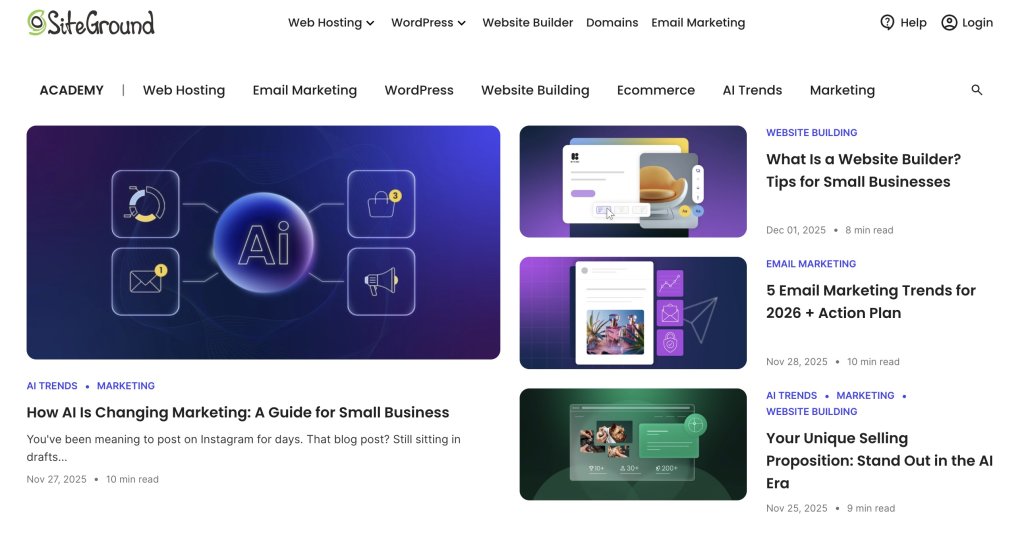
Content marketing and SEO work together to get your business found online.This channel attracts customers organically by positioning your content in search results when they’re looking for information, solutions, or services you provide. It includes blog posts, guides, videos, and optimized website pages that answer questions your customers are already asking.You’re actually reading an example right now—SiteGround’s Academy creates helpful guides like this one that rank when people search for marketing advice.
What’s new? Recently, SEO marketing has shifted with AI-generated search results—optimizing for AI Overviews (Google’s AI-powered summaries) now matters as much as traditional rankings.
So your content needs to be clear, structured, directly answer specific questions, and demonstrate genuine experience and expertise that adds real value to readers.
- Best for: Businesses where customers research before buying, local services
- What it takes: Time for content creation and optimization
- When you’ll see results: 6-12 months for meaningful traffic
3. Social Media Marketing (Organic)
Organic social media marketing involves building an audience and engaging with potential customers on digital platforms like Instagram, LinkedIn, Facebook, or TikTok without paying for ads. You’re creating content that earns attention rather than buying it. In fact, more than 40% of consumers now use social media as a discovery engine, according to “We Are Social,” which is why social media marketing for small businesses has become essential for reaching new audiences.
What’s new? Facebook and Instagram content is now searchable on Google, which means your social posts can show up in search results and drive discovery beyond the platform itself.
- Best for: Visual businesses (food, design, fashion), B2B on LinkedIn, community-focused brands
- What it takes: Time for consistent posting and customer engagement
- When you’ll see results: 3-6 months to build traction
5. Social Media Ads
Social media advertising lets you target specific demographics, interests, or behaviors on social media platforms like Facebook, Instagram, and LinkedIn. Unlike organic social, you’re paying to put your content in front of people who haven’t necessarily chosen to follow you yet.
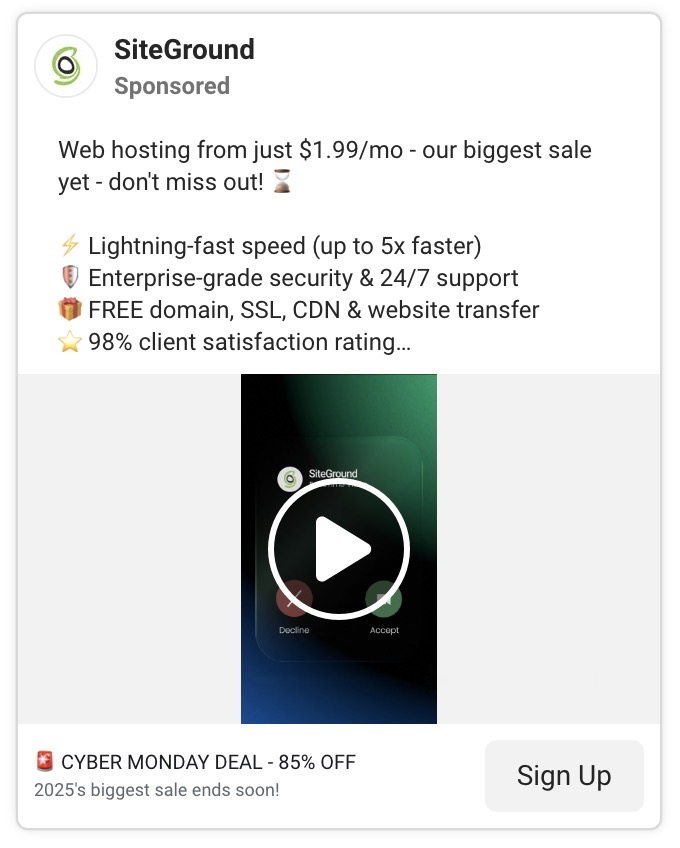
It’s a form of direct marketing that gives you precise control—you can target a 30-mile radius around your shop, people who visited your website last week, or professionals in specific industries. This precision means you can directly tie your ad spend to results from specific audience segments. For example, SiteGround uses targeted social ads during the Black Friday campaign to reach website owners actively looking for hosting deals—the right message, to the right audience, at exactly the right time.
Influencer marketing falls into this category too—paying creators or micro-influencers to promote your product to their followers. For small businesses, this often works better with local or niche micro-influencers (under 10,000 followers) who charge reasonable rates and have engaged audiences.
- Best for: Ecommerce, lead generation, reaching specific audience segments
- What it takes: Budget for ad spend and creative production
- When you’ll see results: Immediate reach, 1-2 months to optimize performance
4. Paid Search Ads
With paid search, you show up at the top of Google search results when people look for what you offer. You pay per click, which means you only spend money when someone actually visits your site.
- Best for: Local services, high-intent purchases, competitive markets
- What it takes: Budget for ad spend and campaign management
- When you’ll see results: Immediate traffic once campaigns are running
6. Referrals & Word of Mouth Marketing (WOM)
Word of mouth marketing is when people organically talk about your business—whether that’s recommending you to a friend, leaving a review, or sharing their experience on social media. Referral marketing happens when existing customers recommend your business to others.
Both are among the oldest marketing tactics out there, but they remain some of the most effective. In fact, around 88% of consumers globally trust customer recommendations more than any other form of marketing, according to WiserReview. Referrals and word-of-mouth can happen naturally as people share positive experiences, or you can build systems to make it easier—referral programs, review requests, or customer testimonial campaigns. Social proof examples like online reviews, testimonials, and case studies all feed into this channel by giving potential customers confidence in your business.
7. Local Partnerships & Events
This channel involves collaborating with complementary businesses or participating in community events to reach potential customers face-to-face. Think vendor booths at farmers markets, co-hosted workshops, or cross-promotions with nearby businesses.
While most marketing advice focuses on digital channels, community building matters just as much offline as it does online. Face-to-face connections build trust faster than any social media post. Local partnerships create networks that refer customers back and forth, and community events put your business in front of people who are already invested in supporting local. For brick-and-mortar businesses especially, being present and visible in your community often drives more sustainable growth than chasing online trends.
- Best for: Local businesses, brick-and-mortar stores, community-focused brands
- What it takes: Time and budget for event costs and partnership development
- When you’ll see results: Depends on event frequency and follow-up
8. Direct Outreach
Direct outreach is the practice of personally contacting potential customers through email, LinkedIn, phone calls, or in-person meetings. It’s targeted, one-to-one communication with prospects you’ve identified as good fits.
We’ve already covered email marketing and paid advertising as forms of direct marketing, but direct outreach takes it a step further—it’s proactive, personalized prospecting rather than waiting for people to find you.
Technically, this sits somewhere between marketing and sales, and not everyone would call it a “marketing channel.” But for small businesses and freelancers, that distinction doesn’t matter much—you’re the one finding customers, whether you label it marketing or sales.
If you’re a consultant landing clients through LinkedIn messages or a local service business knocking on doors, this is part of your customer acquisition strategy. It’s hands-on, personal, and often necessary when you’re building from the ground up.
- Best for: B2B services, high-ticket offerings, local sales
- What it takes: Time for research and personalized outreach
- When you’ll see results: Varies by sales cycle length—can be immediate or take months
How to Choose Your Marketing Channels: A Quiz
Before you start picking multiple channels, get clear on one thing: your unique selling proposition (USP). What makes you different from competitors? Why should someone choose you over the ten other options in their search results?
Your USP doesn’t change which marketing channels exist, but it shapes which ones make sense for you. If you compete on price, paid search works—people searching “affordable plumber near me” or “cheap web hosting” find you immediately. Premium quality and craftsmanship? SEO and Instagram showcase that. Local expertise? Focus on Google Business Profile and community partnerships.
You don’t need a perfect elevator pitch, just clarity on what you do differently. That clarity makes every marketing decision—from channel selection to message creation—easier.
Now, let’s figure out which channels match your business.
| Question | Channels |
| 1. What type of business do you run? | |
| A. B2B service or software (selling to other businesses) | LinkedIn, email, SEO |
| B. Ecommerce or product-based business (selling physical or digital products) | Social Media, email, social ads |
| C. Local service business (plumber, salon, consultant, contractor) | Local SEO, referrals |
| D. Creative freelancer or agency (designer, writer, photographer, marketer) | Social Media, direct outreach |
| 2. Where do your customers make buying decisions? | |
| A. They research extensively online, read reviews, compare options, and take weeks or months to decide | SEO, email |
| B. They buy quickly when they see something they like—impulse purchases or urgent needs | Social ads, paid search |
| C. They rely heavily on recommendations from people they trust | Referrals, word of mouth |
| D. They search for solutions when they have an immediate problem to solve | Paid search, local SEO |
| 3. What’s your realistic weekly time commitment for marketing? | |
| A. 10+ hours—I can dedicate significant time to marketing | SEO, content, organic Social |
| B. 5-10 hours—I have some time but it’s limited | Email, one social platform |
| C. 2-5 hours—I’m stretched thin and need efficiency | Email, referrals |
| D. Less than 2 hours—I barely have time for marketing at all | Paid ads, referrals |
| 4. What’s your monthly marketing budget? | |
| A. $500+—I can invest in paid marketing channels | Paid search, social ads |
| B. $100-$500—I have a modest budget | Email platform, small ad tests |
| C. Under $100—I need mostly free or low-cost options | SEO, organic social, email |
| D. $0—I have no budget, only time | SEO, organic social, referrals |
| 5. What existing assets do you already have? | |
| A. An email list (even if small) and/or existing website traffic | Double down on email, SEO |
| B. Happy past customers who could refer others | Referral program |
| C. A social media presence with some followers | Optimize current platform |
| D. None of the above—I’m starting from scratch | Pick 1 channel, commit 6 months |
| 6. How do you prefer to create content? | |
| A. Writing (blog posts, articles, email newsletters) | SEO, email, LinkedIn |
| B. Visual content (photos, graphics, short videos) | Instagram, Facebook, Pinterest |
| C. Speaking/video (longer videos, presentations, conversations) | LinkedIn, YouTube, events |
| D. I don’t want to create content—I’d rather pay for visibility | Paid search, social ads |
| 7. What’s your sales cycle like? | |
| A. Long (months)—customers need nurturing, multiple touchpoints, trust-building | Email, SEO, LinkedIn |
| B. Medium (weeks)—some research required but not extensive | Email, organic social, SEO |
| C. Short (days)—quick decisions once they discover us | Social ads, paid search |
| D. Immediate—people buy right away when they need the solution | Paid search, local SEO |
What Your Answers Mean
Look at which marketing channels appeared most frequently next to your answers—those are your starting point. If SEO and email showed up 4-5 times, that’s where you should focus. If your answers point to 3-4 different channels, narrow it down by prioritizing what you already have (question 5) and what you can realistically commit to (questions 3 and 4).
Quick Decision Guide
If your answers were all over the place:
Time-poor + Budget-rich: Start with paid search or social ads
Time-rich + Budget-poor: Start with SEO/content + one organic social platform
Have existing assets: Double down on what you already have (email list → email marketing, website traffic → SEO, past customers → referrals)
Starting from scratch: Pick the ONE channel where your customers are most active. Commit for six months before adding another.
From Channels to Marketing Strategy: Make It Work
Here’s what most marketing advice won’t tell you: the “best” marketing channel is whichever one you’ll actually stick with long enough to see results. A mediocre channel executed consistently beats a perfect channel you abandon after three weeks.
So pick 1-2 marketing channels based on where your customers are and what you can realistically commit to. Track what brings actual customers (not just likes or traffic—customers). Double down on what works. Cut what doesn’t.
And if email marketing made your list? You’re in good company. It’s one of the few digital channels where you own the audience, control the message, and see real ROI without fighting an algorithm. SiteGround Email Marketing makes it ridiculously simple to get started—build your email list, send campaigns, and track what’s working, all without needing a designer or tech background.
Whatever marketing channels you choose, commit to them. Give them time. Measure what matters. Then build from there.
Improve Your Email Campaigns with SiteGround!
Want your emails to reach more people? Try SiteGround Email Marketing. With an average delivery rate of 98.8%, your emails will land in your subscribers' inboxes. 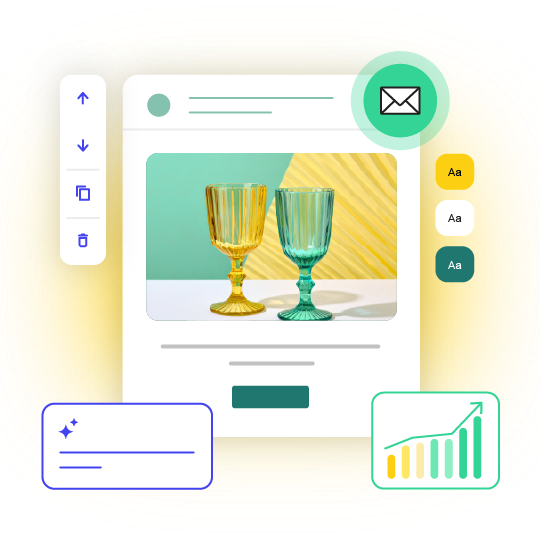





Comments ( 0 )
Thanks! Your comment will be held for moderation and will be shortly published, if it is related to this blog article. Comments for support inquiries or issues will not be published, if you have such please report it through our official channels of communication.
Leave a comment
Thanks! Your comment will be held for moderation and will be shortly published, if it is related to this blog article. Comments for support inquiries or issues will not be published, if you have such please report it through our official channels of communication.