How to Choose a Blog Niche That Works—5 Simple Steps

If you’ve ever thought about starting a blog, you’ve probably wondered: Isn’t it too late? Between saturated topics, changing algorithms, and AI content everywhere, it can feel like blogging’s best days are behind us. But here’s the truth—blogs are still one of the best ways to build authority, boost SEO, and connect with your audience.
Still, one thing that can stop many people before they even start is choosing a blog niche. And honestly—why is it even important? Whether you’re a business owner, freelancer, or creative professional, it’s easy to get stuck here. Most advice says things like “follow your passion” or “pick the most profitable niche.” But if you’re running a business, your blog needs to do more than just generate clicks—it needs to attract the right audience, support your goals, and give you enough content ideas to keep going long-term.
Here’s the good news: choosing a blog niche isn’t about finding the perfect topic and sticking with it forever. It’s about finding a strategic starting point—one that highlights your expertise, draws in your ideal customers, and evolves with your business.
This guide walks you through six practical steps to choose a profitable blog niche that works for your business. No generic advice—just a clear framework you can act on today.
What Is a Blog Niche?
A blog niche is the specific topic or area of expertise that your blog focuses on. Niche blogs typically appeal to geographic areas, a specialty industry, cultural or age groups, or any other particular group of people. If you run a consulting business, your particular niche might be “B2B marketing strategy.” If you own a bakery, it could be “seasonal baking tutorials.”
A niche is a topic, but it’s a narrower aspect of that broader topic. For example, if your passion is photography, the right blog niche for you could be nature photography, architectural photography, or wedding portraits.
Here’s what most articles on choosing a blog niche miss: your niche doesn’t lock you into writing about one tiny thing forever. Consider using a core + satellites model instead.
The Core + Satellites Formula:
Core niche = your main expertise + your target audience’s primary need
Example: Local bakery owner → “seasonal baking tutorials and recipes”
Satellite topics = related problems your audience faces that connect back to your core
Using the same example:
Core: Seasonal baking tutorials and recipes
- Satellite 1: Ingredient sourcing and supplier relationships
- Satellite 2: Pricing baked goods for profitability
- Satellite 3: Marketing your bakery on social media
- Satellite 4: Managing holiday rush orders
Each satellite topic serves your core audience (people interested in your baking expertise) and naturally leads readers back to your bakery, giving you content variety without losing focus.
Why does this approach work better? When you stick to one focused topic, people interested in one of your posts have a high chance of being interested in all your other content. Plus, search engines recognize topical authority and reward focused expertise with better rankings.
But going too narrow limits your audience size and makes it difficult to generate enough content ideas to sustain long-term growth.
The core + satellites approach solves both problems. You build authority in one focused area, then expand into related topics as you learn what your audience needs. You’re choosing a starting point that can grow with your business, not a permanent constraint.
Now that you understand what a blog niche is and how to think about it flexibly, let’s walk through the exact process for choosing yours.
How to Choose a Niche: Your Step-by-Step Guide
Blogging isn’t dead—but it has evolved. With AI-generated content flooding the web and search algorithms prioritizing genuine expertise, blogs that perform well today look very different from those a few years ago. The more focused and authoritative your blog, the better it performs.
This six-step process will help you choose the right blog niche that works for your business, not against it.
Step 1: Start With Your Strategic Foundation
First things first. Before you pick topics, get clear on why you’re blogging. Most small business owners skip this and jump straight to “what should I write about?”—then wonder why their blog isn’t bringing in customers.
Define your business goals first. Whether you’re adding a blog to an existing business or starting a blog as your primary income source, get clear on what success looks like. Do you want to generate leads? Establish authority? Educate customers before they buy? Your perfect blog niche should directly support at least one of these goals.
A useful way to define your audience is through the STP marketing framework—Segmentation, Targeting, and Positioning. First, segment your audience into smaller groups (for example, a fitness studio might serve busy professionals, new moms, and seniors). Then, choose one group to target first. Finally, decide how you want your brand to be perceived by that segment. Your blog niche should reflect that positioning.
Map where your blog fits in your reader’s journey—this is called customer journey mapping. When someone discovers your blog, are they just learning about a problem, comparing solutions, or ready to take action?
Match your content to your goals:
- Want affiliate income? Create product roundups, comparison guides, and tutorials showing how to use specific tools
- Establishing authority? Write in-depth expert content that showcases your unique knowledge and frameworks
- Building an email list? Offer downloadable templates, checklists, or guides that require signup
- Attracting clients? Share case studies, methodology breakdowns, and answers to questions prospects ask
Most successful blogs focus 70% of content on attracting new readers (educational basics, problem identification) and 30% on converting them (solution comparisons, detailed guides, resources). So start broad to build audience, then create valuable content that moves them toward your goal.
Today’s blogs aren’t just text—they also include video, audio, and interactive content. Match format to purpose: educational content works as quick videos or infographics, detailed guides as long-form articles, and conversion-focused content as downloadable resources or interactive tools.
Last but not least, set up your blog on the right technical foundation.
WordPress is the most popular blogging platform and for good reason: you own your content completely, it gives you full control over SEO and customization, and it scales as your blog grows. Most importantly, thousands of plugins and themes make it beginner-friendly while remaining powerful enough for advanced users.
But WordPress is only as good as the hosting behind it. Choose WordPress hosting built for speed, reliability, and ease of use—like SiteGround’s WordPress hosting, which includes built-in caching, automatic updates, and staging environments. Page speed matters for both user experience and search rankings.
Step 2: Use the Three-Circle Method to Find Your Core Blog Niche
Once you know your strategic foundation, it’s time to find your actual topic. The Three-Circle Method helps you choose a niche that’s practical, profitable, and sustainable.

Circle 1: What you know
List your expertise and experience. What can you explain better than most people (and AI)? What have you spent years doing? What do friends ask you about?
For a small business owner, this might include your industry knowledge, lessons from running your business, skills you’ve developed, or problems you’ve solved for customers. You don’t need to be the world’s leading expert—you just need to know more than your target audience. This real-world expertise is exactly what makes content valuable for AI citations—AI search tools prioritize sources that demonstrate practical, firsthand knowledge over generic information.
Circle 2: What your audience wants to read about
This is about their pain points and search demand, not what you think they should care about. What questions do they ask repeatedly? What problems keep them up at night? What are they actively searching for online?
Look at your customer service emails, social media comments, and sales conversations. These reveal the real questions your audience has. Then verify there’s actual search demand using keyword research tools (we’ll cover this in Step 3).
Circle 3: What sustains you
This includes both passion and monetization potential. Can you write about this topic consistently for the next year without burning out? Does it connect to products, services, or revenue streams for your business?
A topic might be profitable, but if you dread writing about it, you won’t last. Similarly, you might love a topic, but if it doesn’t lead to business outcomes, it’s a hobby, not a strategy.
Your blog niche lives where all three circles overlap. That’s your sweet spot—you know enough to provide value, your audience actually wants it, and you can sustain it long-term while supporting your business goals.
If nothing overlaps perfectly, that’s normal. Pick the area with the strongest overlap across at least two circles, then commit to learning or adjusting as you go.
Need inspiration? Check out our blog niche ideas section below for specific examples across different industries and business types.
Step 3: Validate Your Niche With Data
You’ve identified a potential niche using the Three-Circle Method. Now validate it with data before you commit.
Research search volume and trendsUse Google Trends to check if interest in your blog niche is growing, stable, or declining. For example, a niche with 1,000 monthly searches growing 20% annually beats one with 5,000 searches that’s declining—momentum matters more than current volume. For example, “gut health” (growing steadily since 2019) now outperforms “keto diet” (down 80% from its 2019 peak).

Use keyword research tools like Google Keyword Planner or any SEO platform to find terms with meaningful search volume. Focus on long-tail keywords (like “weekend itinerary for Prague with friends” instead of “Prague travel guide”) to reduce competition and attract readers.
A good rule of thumb is finding 20-30 related long-tail keywords you could reasonably rank for, though this varies by industry—B2B niches might have fewer high-value keywords, while consumer topics typically offer more options.
Understanding search in 2025: Why blogging still works (if you do it right)
You’ve probably noticed that when you search on Google, you often see an AI-generated summary at the top before the traditional links. Nearly half of all searches now show these AI Overviews, and it’s natural to worry: if Google is answering questions directly, will anyone click through to blogs anymore?
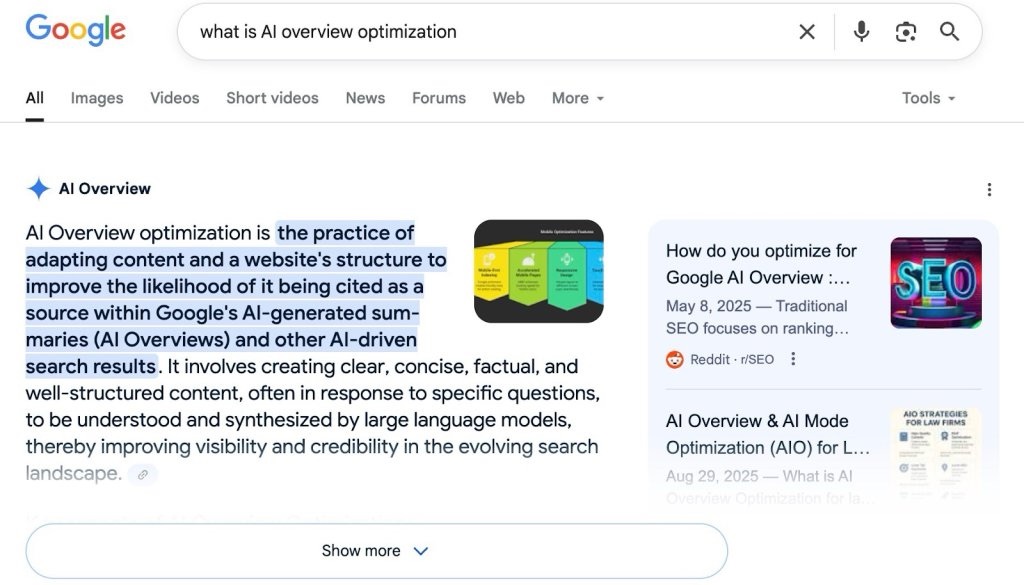
Traffic patterns have shifted, but blogs remain powerful for building businesses—if you have something unique to say. AI Overviews provide quick answers, but they can’t replace the depth, real examples, and personal expertise that blogs offer. When people need more than a surface-level answer—when they’re making decisions, comparing options, or looking for trusted
The caveat is that generic content that repeats what everyone else says isn’t going to do the trick. You need a unique angle: your specific experience, a contrarian perspective, data from your own work, or a framework you’ve developed. If you don’t have something different to share, you’re better off choosing a different marketing channel.
More importantly, a smaller number of highly qualified readers (people genuinely interested in what you offer) is far more valuable than high traffic from random visitors. Blogging positions you as an expert, builds trust before people ever contact you, and creates a library of content that works for your business around the clock.
How to approach AI Overview Optimization
When researching your blog niche, search for your target keywords and notice what appears:
- What does the AI Overview cover? (Usually just basics)
- What’s missing that you could provide? (Depth, specific examples, personal experience)
- What sources does it cite? (These are the types of blogs Google trusts)
This tells you two things: First, if AI Overviews appear for your keywords, it confirms people are actively searching for this information. Second, the gaps in what AI covers show you exactly where to provide value—detailed case studies, step-by-step processes based on real experience, or specific applications for your audience.
Evaluate competition and find gaps
Competition proves people care—don’t avoid it. Search your main keywords and check the top 10 search results for gaps. Are they all targeting beginners while intermediate users are underserved? Are they outdated (two years old or more)? Are they text-only while you could add videos or visuals? Are they generic while you can be industry-specific?
When evaluating these results, don’t rely solely on keyword difficulty (KD) scores. Here’s why difficulty scores don’t tell the whole story: A keyword with KD 45 might seem hard to rank for, but if the top results are outdated (three years old or more), text-only, or targeting general audiences when you’re focused on a specific segment, you actually have a strong opportunity. Always manually check the top 10 results—stale, generic content is easier to beat than fresh, comprehensive content from trusted brands, regardless of the difficulty score.
Assess monetization potential
Examine successful blogs in your niche to see how they monetize. For service businesses, does this niche naturally lead to client inquiries? For product businesses, can you recommend your products naturally within the content?
Check if companies in your blog niche have affiliate programs if relevant to your model. If you can’t draw a clear line from blog content to revenue, reconsider your niche.
Gauge audience interest
Monitor active forums, Facebook groups, Reddit communities, or LinkedIn groups where people discuss your topic. High engagement proves your audience exists. Pay attention to repeated questions—user-generated content in these communities reveals content gaps and shows how your audience actually talks about their problems.
Brainstorm at least 50 potential blog post topics. If you can’t easily generate 50 ideas, your niche might be too narrow. Consider publishing a few test posts to validate engagement before fully committing.
Step 4: Plan Your Content Pillars
You’ve validated your blog niche—now it’s time to plan how you’ll actually fill it with content. Content pillars give your blog structure and help you build authority systematically.
Identify 3-5 core content pillars within your niche
Content pillars are the main themes you’ll write about repeatedly. They’re broader than individual blog posts but more specific than your overall niche.
The Content Pillar Formula:
To identify your pillars, answer these questions about your target audience:
- What do they need to learn? (Educational pillar)
- What problems do they face? (Problem-solving pillar)
- What decisions do they need to make? (Decision-support pillar)
- What tools or resources do they need? (Resources pillar)
- What does success look like for them? (Aspirational/advanced pillar)
These are common pillar types, but you can create your own based on what your audience needs—just pick 3-5 that best match your business goals.
Example: Yoga studio owner (core niche: “yoga for stress relief and flexibility”)
- Educational: How yoga reduces stress and improves flexibility
- Problem-solving: Modifications for beginners with limited mobility
- Decision-support: Choosing the right yoga style for your goals
- Resources: At-home practice guides and breathing technique videos
Each pillar should connect back to your services or products, creating natural pathways from content to conversion.
Apply the N-E-E-A-T principle to your pillars
Google evaluates content quality using the N-E-E-A-T framework (formerly E-E-A-T): Notability, Experience, Expertise, Authoritativeness, and Trustworthiness. Your content pillars should demonstrate all five:
- Notability: Choose pillars where you or your business has recognition or unique positioning in your field.
- Experience: Share real examples from your business—actual client situations, problems you’ve solved, or processes you’ve refined through trial and error.
- Expertise: Go deep on topics where you have genuine knowledge. Surface-level content won’t cut it in 2025.
- Authoritativeness: Build pillars around topics where you can cite data, reference industry standards, or provide frameworks others can follow.
- Trustworthiness: Be transparent about limitations, cite sources, and provide accurate information. One false claim can undermine your entire blog.
Each content pillar should allow you to demonstrate these qualities repeatedly. If a potential pillar doesn’t let you do that, choose a different one.
Structure site architecture for topic clusters
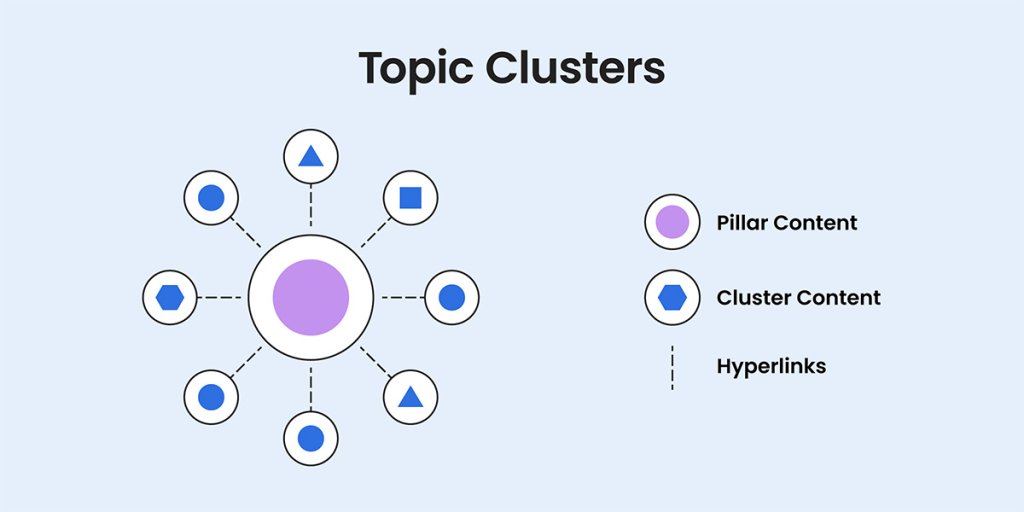
Topic clusters organize your content so both readers and search engines understand your expertise. Here’s how it works:
Create a pillar page for each of your 3-5 pillars. This is a comprehensive guide (1,500-3,000 words) that covers the topic broadly. For example: “Complete Guide to Stress-Relief Yoga Practices.”
Then create cluster content—individual blog posts that dive deep into specific aspects of that pillar. Each cluster post links back to the pillar page, and the pillar page links out to all cluster posts. This creates a web of related content that signals topical authority to search engines.
Here’s an example cluster for the “Stress-Relief Yoga” pillar:
- Pillar page: Complete Guide to Stress-Relief Yoga Practices
- Cluster posts: “5-Minute Breathing Exercises for Instant Calm,” “Best Yoga Poses for Tension Headaches,” “Creating a Calming Evening Yoga Routine”
Pillar pages, cluster posts, and internal links work together to build topical authority.
Technical note: As your content library grows, site performance matters. Topic clusters mean more internal linking and heavier site architecture. Choose WordPress hosting optimized for performance—like the SiteGround WordPress hosting—that can handle growing content libraries without slowing down. Fast page speeds keep both readers and search engines happy as you scale.
Step 5: Create Content That Ranks and Engages
Once you have your content pillars mapped out, it’s time to actually create the content. The way you write and structure your posts determines whether they rank in search results and convert readers into customers.
Build a content ladder
Don’t treat each blog post as a standalone piece. Design content that naturally leads readers deeper into your expertise:
- Start with foundational content that attracts beginners and answers basic questions. These posts typically have higher search volume and broader appeal.
- Build intermediate content that assumes baseline knowledge and goes deeper. These posts serve readers who’ve already consumed your foundational content and want more.
- Top with advanced content that showcases your expertise and attracts serious buyers or collaborators. These might have lower traffic but higher conversion rates.
This approach—often called a “content ladder”—keeps readers on your site longer and positions you as the go-to resource as their needs evolve. It also gives you a clear content roadmap: if you notice lots of traffic on beginner content but you haven’t created intermediate posts yet, you know what to create next.
Go beyond text-only content
Consider how your content pillars translate across formats. A detailed blog post on website performance could also become a short tutorial video, an Instagram carousel of quick practical tips, or a downloadable optimization checklist. This multi-format approach meets your audience wherever they prefer to consume content while maximizing the value of each piece you create.
Use AI as your research assistant, not your writer
Leverage AI-powered blogging tools strategically:
- For ideation: Use ChatGPT prompts “Generate 20 blog post angles about [your topic] for [your audience]” to overcome writer’s block
- For outlines: Use AI to create article structures, then customize based on your expertise
- For research: Have AI summarize multiple sources or explain complex topics you’ll then rewrite in your voice
- For optimization: Use AI tools to suggest meta descriptions, headline variations, or identify content gaps
But always add what AI can’t replicate: your case studies, client examples, mistakes you’ve made, specific frameworks you’ve developed, and your authentic voice in the introduction and conclusion. AI handles the scaffolding; you provide the insights that make people trust and hire you.
Think about distribution: How will people find your content?
You can share your blog on social media, run paid ads, or rely on word-of-mouth—but most small businesses depend primarily on organic search traffic. That means optimizing your content for SEO so people can discover you when they’re actively searching for solutions.
If you’re new to this, our WordPress SEO for beginners guide covers the technical essentials. But here’s what SEO looks like these days: it’s messier than it used to be. Traffic patterns have shifted, AI Overviews appear in search results, and generic content gets buried. The blogs that still succeed focus on three non-negotiables:
- True expertise: Write from real experience, not research alone. Share what you’ve actually done, mistakes you’ve made, and results you’ve achieved.
- Brand building: People need to recognize and trust you. Consistent publishing, a clear point of view, and genuine engagement with your audience matter more than ever.
- Original value: Provide something different—a unique angle, proprietary data, a contrarian perspective, or a framework others can’t easily replicate.
Write for topics, not just keywords
Semantic SEO means optimizing for search intent and topic comprehensiveness, not keyword density. Remember the long-tail keywords we discussed in Step 3? This is how you use them naturally.
Instead of targeting “email marketing tips” and repeating that exact phrase, write about the complete topic: email deliverability best practices, subject line optimization, list segmentation strategies, automation workflows, engagement metrics that matter, and compliance requirements. Google’s algorithm understands these concepts are related.
When planning a blog post, ask “What would a thorough answer to this question include?” Then cover those sub-topics naturally. If someone searches “how to improve email open rates,” they also need to understand email marketing metrics like deliverability, sender reputation, and list quality—even if they didn’t search for those terms specifically.
Turn readers into a community
Traffic means nothing without connection. Community building is what transforms casual readers into loyal followers and customers:
In your first 90 days, commit to:
- Responding to every single comment within 24 hours with thoughtful replies, not just “thanks”
- Ending each post with a specific question that invites discussion
- Start an email newsletter from day one—it’s super easy with SiteGround Email Marketing. Offer lead magnets like downloadable checklists, templates, or guides to capture emails from readers who aren’t ready to buy yet, then actually engage when people reply (most bloggers never do, which sets you apart)
- Sharing reader questions and your answers in future posts: “Sarah asked me about X, here’s what I told her…”
- Creating a simple feedback loop: ask readers what they want to learn next
The depth of your expertise and genuine connection with readers is what AI can’t replicate. People remember how you made them feel, not just what information you provided. This is especially critical when competing with AI-generated content—your community becomes your moat.
Step 6: Launch, Measure, Adjust
You’ve planned your content strategy—now it’s time to put it into action. First, make sure your site can be found by submitting your website to Google using Search Console—without this, your content won’t appear in search results.
The first 90 days are about testing your assumptions, learning what resonates with real readers, and adjusting based on actual data rather than guesses.
What metrics actually matter early on
Forget vanity metrics like total page views in your first 90 days. Focus on digital marketing metrics that indicate you’re on the right track:
- Organic traffic growth: Are you getting visitors specifically from search engines (not social media, direct visits, or paid ads)? Even a small amount of organic search traffic in your first 90 days is a positive sign. Track the trend, not the absolute number.
- Time on page: Are people reading your content or bouncing immediately? If average time on page is under 30 seconds, your content doesn’t match search intent or your headlines are misleading.
- Engagement signals: Comments, email replies, social shares, or direct messages show people find your content valuable enough to respond. One engaged reader is worth more than 100 silent visitors.
- Keyword rankings: Check if your target keywords are starting to appear in search results, even on page 2 or 3. Movement from position 50 to position 25 shows you’re heading in the right direction.
- Page speed: This affects both user experience and SEO rankings. Use Google PageSpeed Insights to check your scores. If your site loads slowly, readers leave before your content even appears. SiteGround’s Speed Optimizer plugin is a quick fix for this, as it includes built-in caching and image compression to maintain fast loading times as your content library grows.
When to double down vs. when to pivot
The first six months reveal what resonates. Here’s how to read the signals:
Double down when:
- Specific topics consistently get more traffic and engagement than others
- Certain content formats (how-to guides, case studies, lists) perform better
- You’re getting direct inquiries or questions about particular subjects
- A few posts are starting to rank while others aren’t
Don’t create more variety—create more of what’s working. If your “how to price services” post outperforms everything else, that’s your audience telling you what they need.
Pivot when:
- After 20+ published posts, you’re seeing zero organic traffic growth
- Engagement remains flat despite consistent publishing
- The topics you planned don’t generate the questions or interest you expected
- You’re struggling to generate content ideas (a sign your blog niche is too narrow)
Pivoting doesn’t mean starting over. It means adjusting your angle within your niche or shifting which content pillars you emphasize.
How to read audience signals
| Metric | What to Look For | What It Tells You |
| Search queries | What search terms bring people to your site (check Google Search Console) | Reveals if people find you through the keywords you targeted, or if you’re accidentally ranking for different terms—both tell you what content to create next |
| Comments and emails | Detailed questions and pain points | Each question is a blog post idea handed to you |
| Bounce rates | High exits on specific posts | Content doesn’t match the title or search intent—revise or adjust targeting |
| Repeat visitors | People returning multiple times (website retention) | You’re creating content worth coming back to—you’re building an audience |
| Conversion rate | Contact forms, email signups, service inquiries despite low traffic | Your content attracts the right people, even if volume is small—better than high traffic with no business results |
Use these first 90 days as a learning phase, not a proving phase. The goal isn’t perfection—it’s gathering enough data to make informed decisions about where to focus next.
Blog Niche Ideas to Inspire Your Choice
Now that you understand how to choose and validate your blog niche, here are specific blog niche ideas organized by category. As we discussed earlier, experience-driven niches consistently outperform generic content because they showcase what AI can’t replicate—your real stories, hands-on expertise, and personal journey.
Health and Wellness Blogs
Healthy Eating:
- Plant-based nutrition for endurance athletes (meeting protein needs, race fueling, recovery)
- Meal prep for busy parents (30-minute dinners, batch cooking, picky eater solutions)
- Anti-inflammatory diet for chronic pain management (specific foods, meal planning, tracking results)
Mental Health:
- Anxiety management for high-achieving professionals (workplace strategies, therapy approaches, medication navigation)
- Mental health resources for parents of neurodivergent children (support systems, school advocacy, self-care)
- Burnout recovery for healthcare workers (returning to work, setting boundaries, career pivots)
Fitness Blogs
- Strength training for busy professionals (time-efficient workouts, home and gym options, beginner to advanced progressions)
- Home workout routines (equipment-free exercises, small space solutions, building a home gym on a budget)
- Running and endurance training (from couch to 5K, marathon prep, injury prevention, nutrition for runners)
Lifestyle Blogs
- Home organization for small apartments (storage solutions, multipurpose furniture, decluttering strategies)
- Sustainable fashion on a budget (thrifting guides, ethical brands under $50, capsule wardrobes)
- Minimalist living with kids (realistic decluttering, toy rotation systems, teaching children simplicity)
Personal Finance
- Financial independence for public school teachers (maximizing pension benefits, summer income, early retirement)
- Retirement planning for freelance creatives (SEP IRAs, irregular income investing, healthcare strategies)
- Debt payoff for medical professionals (student loans, high income management, tax optimization)
Career and Productivity
Career Advice:
- Career transitions for military veterans (translating skills, networking strategies, resume writing)
- Freelance writing for B2B SaaS companies (tech terminology, case studies, pricing, portfolio building)
- Remote job hunting for mid-career professionals (landing distributed roles, salary negotiation, avoiding scams)
Productivity Tips:
- Productivity systems for ADHD professionals (task management, time-blocking, focus strategies)
- Time management for working parents (morning routines, meal planning, boundary setting)
- Digital minimalism for knowledge workers (reducing app overwhelm, focus tools, email management)
Technology Blogs
Software Reviews:
- Project management tools for creative agencies (comparing platforms, team size considerations, pricing)
- Accounting software for ecommerce businesses (inventory tracking, multi-channel sales, tax integration)
- Smart home technology for renters (no-installation devices, portable systems, budget options)
Pet Care
Pet Owners:
- Dog training for rescue dogs (trauma-informed approaches, socialization, behavioral issues)
- Budget-friendly cat care (DIY toys, affordable vet alternatives, nutrition on a budget)
- Traveling with pets (car trip preparation, pet-friendly accommodations, documentation requirements)
Pet Health:
- Senior dog care (mobility issues, medication management, quality of life assessments)
- Managing pet anxiety (separation anxiety, storm phobia, vet visit preparation)
- Natural pet remedies (holistic approaches, supplement guidance, when to see a vet)
Choose Your Blog Niche With Confidence
You now have a framework to start your blogging journey: start with your strategic foundation, apply the Three-Circle Method to find your sweet spot, validate with real data (not gut feelings), plan your content pillars, and give yourself some time to learn what actually makes sense. Your blog niche isn’t a lifetime commitment—it can evolve as you learn what your specific audience needs. What matters most is making a decision and getting started.
Once you’ve chosen the right niche for you, set up your blog on solid technical ground. As we covered earlier, WordPress hosting built for performance—like SiteGround’s WordPress hosting—gives you the speed, reliability, and scalability your growing content library needs. You focus on creating great content; your hosting handles the technical side.
Ready to start? Pick your niche, set up your blog, and publish 10 posts in 30 days. Momentum beats perfection.







Comments ( 0 )
Thanks! Your comment will be held for moderation and will be shortly published, if it is related to this blog article. Comments for support inquiries or issues will not be published, if you have such please report it through our official channels of communication.
Leave a comment
Thanks! Your comment will be held for moderation and will be shortly published, if it is related to this blog article. Comments for support inquiries or issues will not be published, if you have such please report it through our official channels of communication.