Website marketing in the AI era: a guide for the small business owner

You built a website. You were pretty pleased with a job well done. And then…you waited. For the visitors. The orders. The inquiries. The love.
Crickets.
Alas, a website without marketing is like a storefront in the middle of the ocean. Beautiful, possibly. Discoverable, not so much. Website marketing is what puts your business on the map, and in 2026, that map has gotten a lot more interesting.
You can still count on core tactics like SEO, content, social media, email, and paid ads. The new wrinkle is that AI tools like ChatGPT, Perplexity, and Google AI Overviews are changing how customers find businesses in the first place. Most small businesses aren’t prepared for that shift. After reading this, you will be.
Key takeaways:
- A website without marketing won’t generate traffic — you need intentional channels to get found.
- The core channels still matter: SEO, content, social media, email, and paid ads each play a distinct role.
- The most effective strategies combine channels so they reinforce each other and build momentum over time.
- SEO fundamentals — clear titles, structured content, and relevant keywords — are the foundation of visibility.
- Email marketing is one of the most reliable long-term assets a small business can build.
- AI search is reshaping discovery, but businesses that do the fundamentals well are already positioning themselves to benefit.
What is website marketing?
Website marketing is every tactic you use to attract visitors to your website and turn them into customers. That includes showing up in Google search, sharing content on social media, sending emails to your list, running paid ads, and, increasingly, getting recommended by AI tools when someone asks for exactly what you offer.
For small businesses, it matters more than ever. You’re not competing just on product or price; you’re competing for attention (and even more so with the launch of ChatGPT ads). People have more options and less patience. If they can’t find you quickly and trust you fast, they move on.
The landscape has also shifted in a meaningful way. It used to be that web marketing was about driving clicks. Now it’s about earning recommendations — from search engines, from social platforms, and from AI tools that are becoming the first stop for millions of people looking for answers (and businesses like yours). We can work with this, so let’s.
Website marketing channels: your core toolkit
No single channel does everything. The businesses that grow consistently are the ones that smartly use several channels together, each one reinforcing the others. Here’s what’s in the toolkit.
1. Search engine optimization
Search engine optimization (SEO) is the practice of making your website easy for search engines to find, understand, and recommend to the right people. When someone searches for “best bakery in Austin” or “how to fix a leaky faucet,” SEO is what determines whether your business shows up.
The SEO basics start on your own pages:
- Title tags, (often called meta titles) tell search engines and searchers what each page is about. If you’ve never set one, your page might be showing up as something deeply unhelpful, like the name of the template you used. Gulp. A good title tag is specific, includes a relevant keyword, and stays under 60 characters so it doesn’t get cut off. Usually you can set them in your website platform — if you’re using the SiteGround Website Builder, for example, adding your meta title is super easy.
- Headers (H1, H2, H3) organize your content the way a good outline would. Your H1 is the main title of the page; H2s and H3s are the subheadings underneath. In most website builders and CMS platforms, you set heading tags by highlighting your text and selecting the heading level from a dropdown or toolbar (as seen below). Search engines read these to understand what your page covers, so they should describe your content clearly rather than be clever for the sake of it.

- Keywords are the words and phrases your customers actually type into search engines. Think about what someone would search if they needed exactly what you offer — “emergency plumber Chicago” or “custom wedding invitations” — and make sure that language appears naturally in your titles, headers, and page copy. The goal is to match how your customers talk, not how you describe yourself internally.
- Content makes up the actual words on your pages. It should answer the questions your customers are asking. The more directly and clearly you do that, the better your chances of showing up when it matters.
These are the basics, but to really tackle SEO thoroughly (especially tasks like keyword research) consider making an SEO checklist. The bonus: the same fundamentals that help you rank on Google are increasingly what help AI tools find and recommend you. We’ll come back to that.
Already set up for SEO, right out of the box
SiteGround’s Website Builder takes care of the technical SEO fundamentals automatically — title tags, sitemaps, SSL, and mobile optimization — so you’re starting from a solid foundation without any setup headaches. It’s designed for business owners, not developers: an intuitive interface, professional templates, and built-in tools that mean you spend less time figuring out your website and more time running your business.
2. Content marketing
Content marketing means creating useful, interesting material that attracts people who are already looking for what you do. Think guides, FAQs, how-tos, articles — anything that answers a real question your customers are asking.
A plumber who publishes “5 signs your water heater is about to give up” isn’t just being helpful. They’re getting found by homeowners at the exact moment those homeowners are worried about their water heater. That’s not a coincidence. That’s good marketing at work.
For small businesses, the formats that work hardest are:
- Articles and guides that answer common customer questions
- How-to guides related to your product or service area
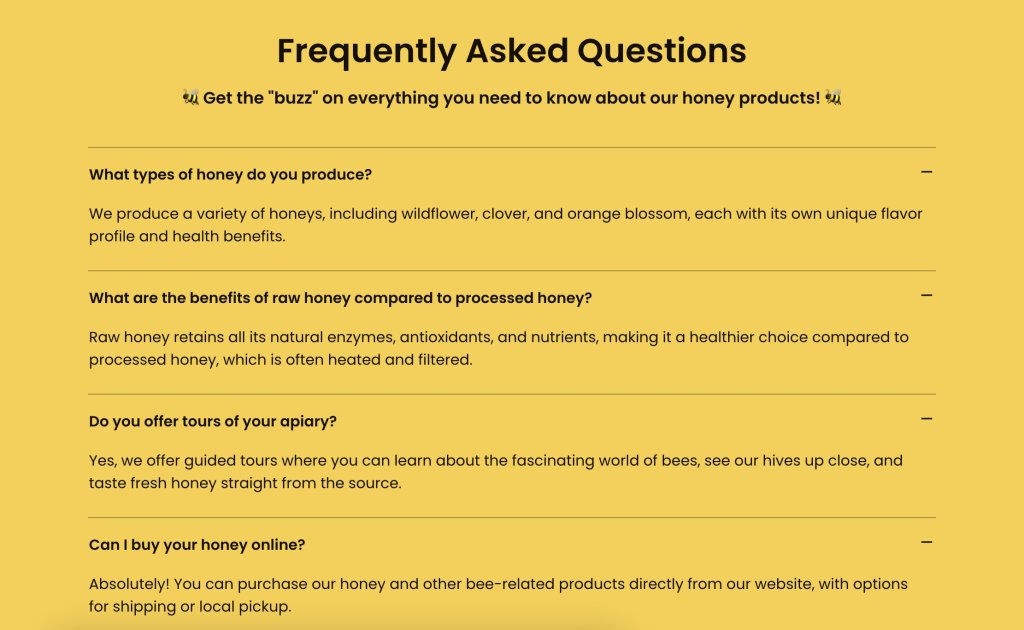
- FAQ pages that cover what people actually ask before buying
Content that answers real questions doesn’t just rank on Google; it’s exactly the kind of material AI tools pull from when they’re generating answers for users. More on that shortly.
3. Social media marketing
Social media marketing won’t replace your website, but it feeds it. Platforms like Instagram, Facebook, LinkedIn, and TikTok are where you build awareness, show personality, and give people a reason to click through.
Not every platform makes sense for every business. A B2B consultant might tap into LinkedIn, whereas a boutique florist might invest time in Instagram marketing, because indeed each has very different target audiences living in very different places online. The key is picking one or two platforms where your customers actually spend time and showing up there consistently.
Social presence also signals credibility to AI tools. When your business is mentioned, tagged, and discussed across the web (not just on your own site) it builds the kind of authority that gets you recommended.
4. Email marketing
Email is the channel that doesn’t play by anyone else’s rules other than yours. No algorithm decides whether your subscribers see your message. No platform change can wipe out your list overnight. It all belongs to you.
Here’s how to get started:
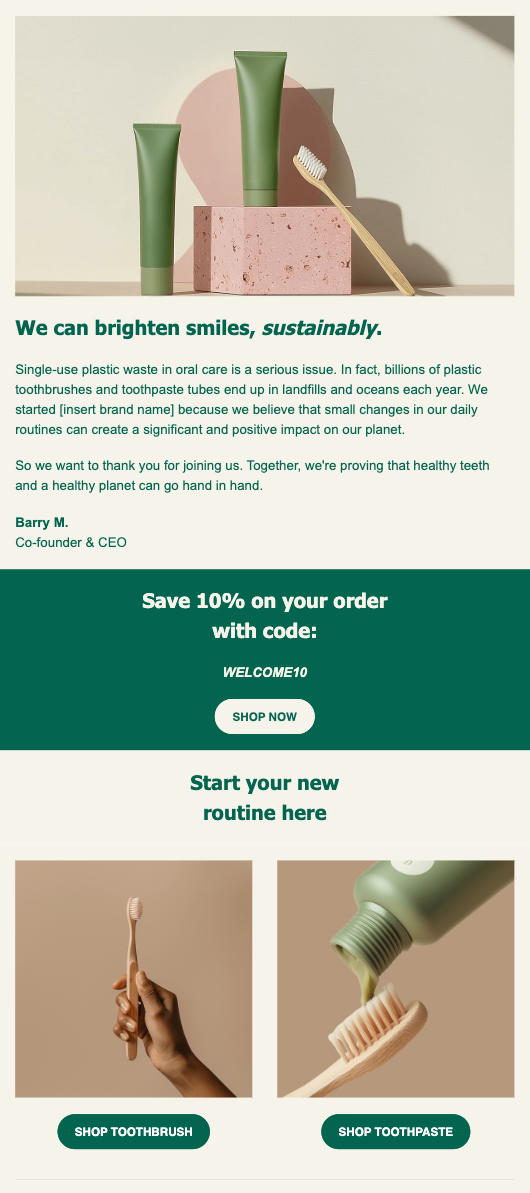
- Pick an email platform. You need somewhere to collect addresses and send email marketing campaigns. Look for something simple with templates, a sign-up form builder, and basic analytics.
- Create a reason to sign up. Often called a lead magnet, this is the thing you offer in exchange for someone’s email address. A first-purchase discount, a helpful guide, a free resource, early access to a sale — whatever makes sense for your target audience. Add the sign-up form to your website, ideally somewhere it’s easy to spot.
- Send something. A welcome email when someone joins, a monthly newsletter, a promotion when you have one. The bar isn’t perfection — it’s consistency. Paying attention to the email customer journey will help you figure out what to say and when.
Building an email list takes time, but it compounds. A hundred engaged subscribers who actually want to hear from you will outperform thousands of social followers who scroll past your posts.
Try SiteGround Email Marketing
Built for small businesses that want professional results without the complexity. Design campaigns, grow your list, and track performance — all from the same place you manage your website. No steep learning curve, no enterprise price tag.
5. Paid advertising (PPC)
Organic growth takes time. Paid advertising — Google Ads, Meta ads, and similar platforms — gets you in front of people immediately. You’re essentially paying to skip the line.
For small businesses, paid ads make the most sense when:
- You need visibility fast (new launch, seasonal push)
- You have a specific offer with a clear return
- You’ve already defined your marketing mix and validated it
Paid isn’t a substitute for organic. But as part of a balanced strategy, it can fill gaps while your longer-term digital marketing efforts build momentum.
The new channel every small business needs to understand: AI search
Something has been quietly (or perhaps not so quietly!) shifting in how people find both information and businesses. Tools like ChatGPT, Claude, and Google AI Overviews don’t just return a list of links. They read across the web, synthesize information, and hand users an answer.
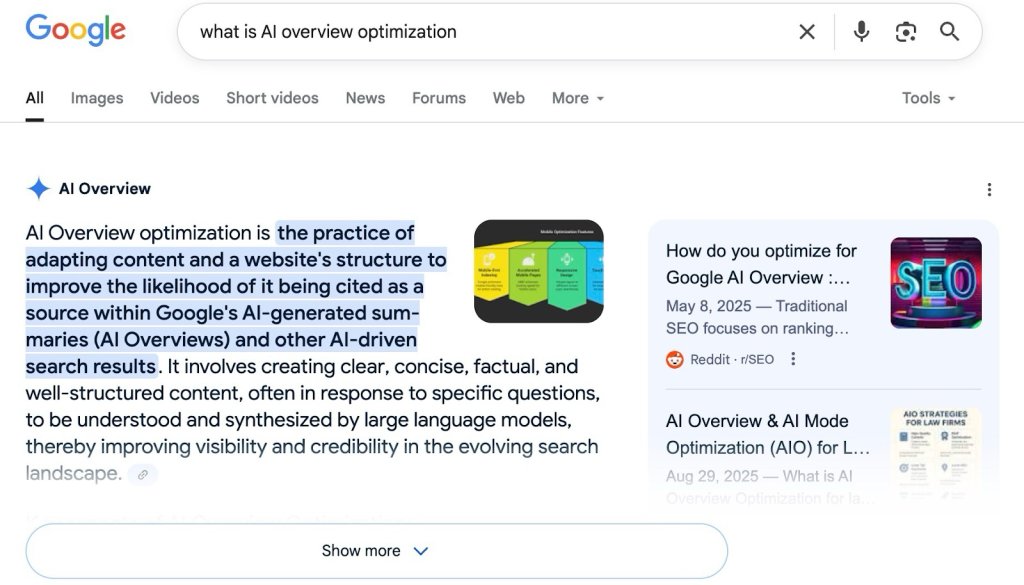
Instead of “search and click,” it’s “ask and get told.”
Someone used to Google “best accountant for freelancers in Denver” and scroll through results. Now they might ask ChatGPT the same question and get a direct recommendation — maybe with a name, a reason why, and a link. If your business isn’t part of that answer, you don’t exist in that moment.
AI has changed marketing for small businesses, and it’s necessary to adapt. Because being recommended by AI is becoming as valuable as ranking on page one of Google. And the businesses positioning for it now have a head start.
The genuinely good news: AI tools don’t require a completely different online marketing strategy. They favor businesses that do the fundamentals well — authoritative content, clear expertise, mentions across credible sources. The same SEO checklist that helps you rank on Google is also feeding your AI visibility. SEO and AI work together, so you’re not starting over. You’re building on what you already have (or are building toward).
How to get your business recommended by AI tools
Check if AI is already finding you
This takes a tiny chunk of time and is a great starting point, because you can’t improve what you don’t know.
Step 1: Search for yourself like a customer would. Open ChatGPT, Claude, Google (for AI Overviews), and any others you use. Search using natural, conversational language — the way a real customer would ask. Something like “who offers the best [your service] in [your city]?” or “where can I buy [your product] near [your location]?”
Step 2: Record what you find. In a simple spreadsheet, note the query, the platform, whether your business appeared, and who else showed up. Aim for 10 or so queries that matter to your business.
Step 3: Understand the gap. Not showing up? Look at who is, and what their content looks like. That gap tells you where to focus your content and authority-building efforts. Already showing up? Note which topics are earning you citations. Those are the subjects to build on: create supporting content around them, add FAQ sections, and make sure those pages have clear Q&A formatting so AI has even more to cite.
Step 4: Some AI tools pass referral data that shows up in Google Analytics 4 (GA4), though not all do. Traffic from certain tools may appear as direct traffic instead. It’s still worth checking monthly.
Here’s how:
- Log in to Google Analytics 4.
- In the left-hand menu, click Reports.
- Go to Acquisition → Traffic acquisition.
- Look at the Source/Medium column.
- Scan for referrals from AI platforms such as Perplexity or ChatGPT.
If you see them, click into the source to see which pages visitors landed on. Those landing pages are the topics AI is already associating with your business, and a strong signal to create more supporting content in that area.
Write content that AI can cite
Now you have an idea for where you should put your focus, but how to do so? AI tools pull answers from content that is clear, specific, and directly addresses real questions. To give them something to work with:
- Write in a conversational, question-and-answer style. Instead of “Our services include X, Y, and Z,” try “What services do we offer? We specialize in X, Y, and Z for [type of customer].”
- Make definitive statements. Vague content is hard to cite. “We’re one of the top options in the area” is easy to skip. “We offer same-day service for plumbing emergencies in the greater Phoenix area” is something an AI can actually use.
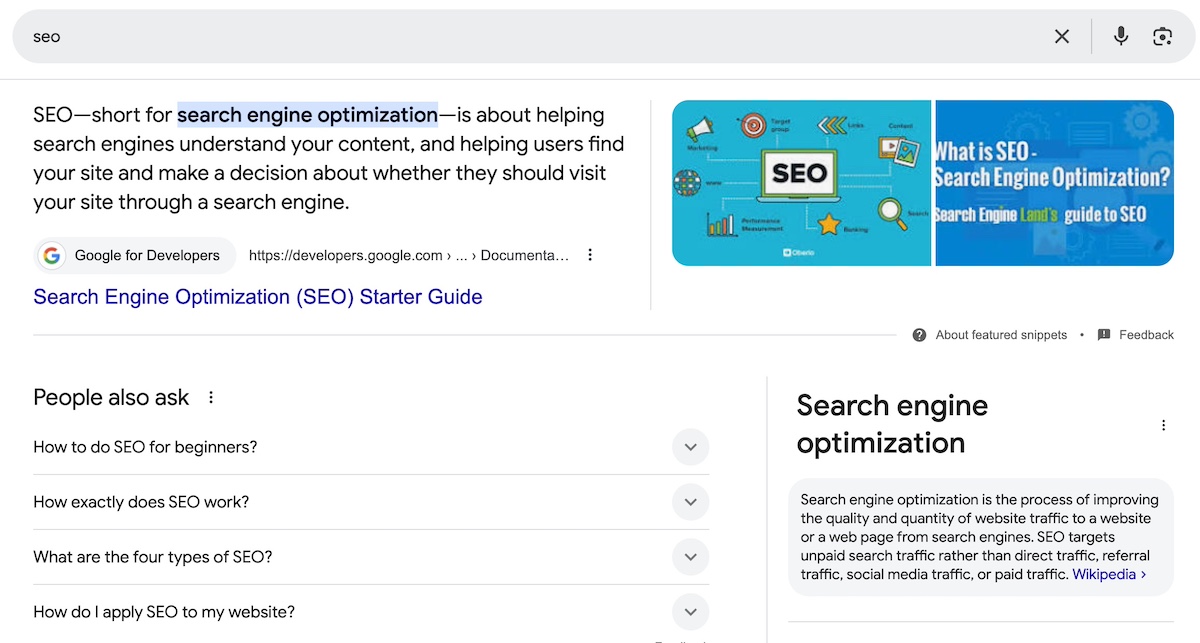
- Aim for featured snippets on Google. A featured snippet — the answer box that appears at the top of search results — is a strong signal that your content is authoritative. AI tools and featured snippets favor the same thing: a clear, direct answer to a specific question.
The tactics above are a strong starting point, but there’s a whole practice dedicated to making your content more visible to AI tools specifically. It’s called generative engine optimization (GEO), and our guide breaks down exactly how it works and what steps to take.
Build authority signals across the web
AI tools don’t just look at your website. They look at what the broader web says about you. A business mentioned in local directories, customer reviews, industry publications, and reputable third-party sites is a business that looks trustworthy.
Practical ways to build this:
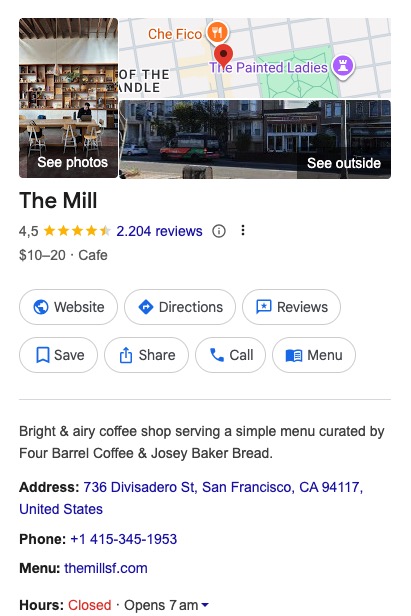
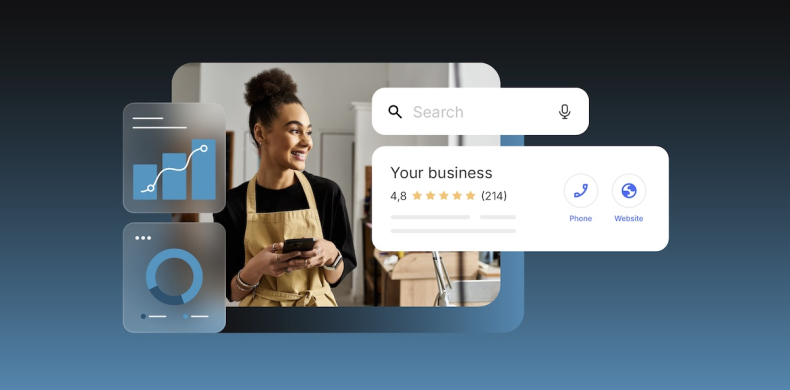
- Claim and complete your Google Business Profile, like the one seen below
- Encourage satisfied customers to leave reviews on Google, Yelp, or industry-specific platforms
- Get listed in relevant directories and local business associations
- Look for opportunities to be mentioned in local press, guest posts, or community sites
Each mention compounds. The more places your business appears credibly, the more authoritative you look to both search engines and to AI.
Don’t have time for PR babysitting? No problem. SiteGround’s AI agents do. If you’re a SiteGround client, you can access AI Studio, which offers loads of AI tools. And with the Plus Plan, you unlock 15+ specialized agents that can handle a surprising amount of the marketing work. Like a Reputation Manager Agent who can comb the dusty corners of the internet to get the pulse on your reputation, plus deliver action items. Or an SEO Agent who can audit your site and breakdown how best to optimize. Or an Image Agent with access to Nano Banana and other image tools so that you can create on-brand artwork in a flash. It’s the kind of output that used to require a whole team, but now it’s manageable for a team of one.
Building your website marketing strategy
You don’t have to do everything at once. In fact, trying to do everything at once is a great way to do nothing well.
Start with the channels that match your current bandwidth and budget:
- Just getting started? Focus on SEO and one social platform (Tiktok marketing for small business can be surprisingly beneficial depending on your market). Get your pages optimized, start answering customer questions in writing, and show up consistently in one place.
- Also add email marketing. It’s easy to set up, doesn’t cost much, and a growing subscriber list will accelerate your impact over time.
- When you’re ready to accelerate, Layer in paid ads strategically and start preparing your content for AI visibility.
All these channels reinforce each other. An optimized website brings in organic traffic. Social shares send people to your site. New visitors join your email list. Email drives repeat visits. Good content earns mentions that build authority. Authority feeds AI recommendations. It’s a flywheel — slow to start, hard to stop.
AI visibility isn’t a separate online marketing strategy. It’s what happens when you do the other channels well, with a bit of intentional framing on top.
Put your website marketing into action
Remember that storefront in the middle of the ocean? Website marketing is what moves it to Main Street. The channels covered here — SEO, content, social, email, paid, and AI visibility — are how you get foot traffic, earn trust, and turn curious visitors into actual customers. None of it is out of reach for a small business. It just takes showing up consistently and building one layer at a time.
What it does require is a solid website underneath it all. One that’s fast, secure, mobile-responsive, and set up to be found. The SiteGround Website Builder gives you that foundation — plus built-in email marketing, AI Studio tools, ecommerce features, and expert support whenever you need it. Because you may have a tiny team, but you shouldn’t have to figure all of this out alone.
Your marketing is only as strong as the website it sends people to. Make sure yours is ready; we’re here to help make it happen.
Website marketing FAQs
Website marketing is the collection of strategies used to attract visitors to your website and convert them into customers. It includes SEO, content marketing, social media, email, paid advertising, and increasingly, visibility in AI-powered search tools.
There’s no single best way — the most effective approach combines channels. For most small businesses, starting with SEO and content marketing builds a strong organic foundation, while social media and email amplify reach. Paid ads can accelerate results when you’re ready to invest.
SEO, content marketing, and email tend to offer the best long-term return for small businesses because they build compounding value over time. Social media builds awareness, and paid ads provide immediate visibility when needed.
No, not a completely separate marketing strategy. AI tools favor the same things traditional SEO does: clear, authoritative, well-structured content and credible mentions across the web. Focus on those fundamentals, and you’re already building AI visibility.
Paid ads can show results within days. SEO and content efforts typically take three to six months to gain traction, but the results last much longer. Email marketing delivers one of the highest returns on investment, with results appearing as soon as you have a list to send to.
It depends on your goals and channels. Many small businesses start with a minimal budget by focusing on organic tactics (SEO, content, social) and scale paid investment as revenue grows. Even a few hundred dollars a month in the right places can move the needle early on.
Track your digital marketing metrics. Google Analytics 4 shows where your traffic comes from and what visitors do on your site. Monitor organic search rankings, email open rates, and social referral traffic. For AI visibility, do monthly manual searches in ChatGPT, Perplexity, and others to see if your business is showing up.




Comments ( 0 )
Thanks! Your comment will be held for moderation and will be shortly published, if it is related to this blog article. Comments for support inquiries or issues will not be published, if you have such please report it through our official channels of communication.
Leave a comment
Thanks! Your comment will be held for moderation and will be shortly published, if it is related to this blog article. Comments for support inquiries or issues will not be published, if you have such please report it through our official channels of communication.