Your Unique Selling Proposition: Stand Out in the AI Era

AI can generate content in seconds, making it easier than ever to show up online—but much harder to be memorable. That’s why your unique selling proposition deserves more attention than ever before. It’s the part of your brand that tells potential customers, “This is why we’re different—and why it matters to you.”
In this guide, we’ll walk you through how to craft a unique selling proposition that stands out, connects with your audience, and holds up even as AI reshapes marketing as we know it.
Key Takeaways:
- Understand your USP: It clearly explains what makes your business different and why that difference matters to your customer.
- Why it matters now: With AI flooding the web with generic, look-alike content, a strong USP is essential to stand out.
- Build it right: Combine a real customer benefit, a clear differentiator, and strengths competitors can’t easily copy.
- Craft an AI-proof USP: Focus on what’s truly unique and human—specific, hard-to-replicate strengths like expertise, personalized support, or brand voice.
- Avoid common mistakes: Don’t be vague, feature-focused, generic-sounding, or inconsistent in how you apply your USP.
What is a Unique Selling Proposition?
A unique selling proposition (USP) is a crisp, memorable statement that explains what makes your business different—and more importantly, why that difference gives customers a clear reason to choose you.
It’s not a tagline, a mission statement, or a generic benefit. It’s the promise at the core of your brand: the specific value customers can count on that they can’t get the same way anywhere else.
In practical terms, your unique selling proposition answers two questions:
- What do we offer that others don’t—or don’t as well?
- Why does that difference matter to the customer?
An effective USP is simple, specific, and focused. If someone reads it and immediately knows, “Ah, that’s why I’d choose them,” you’re on the right track.
What’s the difference between a unique selling proposition and a unique value proposition?
A USP defines what sets your business apart, while a UVP (unique value proposition) explains why that difference matters to your customer. In reality, a strong USP already includes the customer benefit, so most businesses don’t develop both separately. The distinction is mainly useful as a framing tool: it helps you clarify your point of difference and make sure it connects to a real customer need.
Why Your USP Matters Even More in the AI Era
AI is literally everywhere these days, which means customers are bombarded with automated marketing, AI-generated content, and highly personalized recommendations. What’s great is that this makes it easier than for small business marketers to join the content party—but also a whole lot harder to stand out. Your unique selling proposition will have to work harder than we ever thought possible.
Here’s why your USP plays such a critical role today:
- AI makes marketing look and sound more similar: Because AI tools can churn out content in seconds, a lot of brands end up sounding alike. A strong unique selling proposition ensures your messaging stays distinct and human, even when AI is part of your workflow.
- Customers are actively seeking authenticity: People can now spot generic AI writing a mile away. A clear unique selling proposition brings in your human angle—your story, expertise, philosophy, or personality—making your brand feel real, credible, and worth trusting.
- Competition moves faster than ever: AI lets competitors iterate quickly, test messaging instantly, and pivot overnight. An effective USP anchors your brand so you don’t get swept into constant reactive changes.
- Your USP shapes how AI represents you: Search engines, recommendation systems, and AI assistants pull signals from your content. A clear USP helps them understand what truly sets you apart so that they surface you more accurately and more often.
Ultimately, at this stage in the game, you want to have an AI-first mindset. But that doesn’t just mean being able to use AI; it also means being able to distinguish yourself, your business, and your offerings from AI as well. And that’s why a solid USP is all the more important.
Key Components of a Unique Selling Proposition
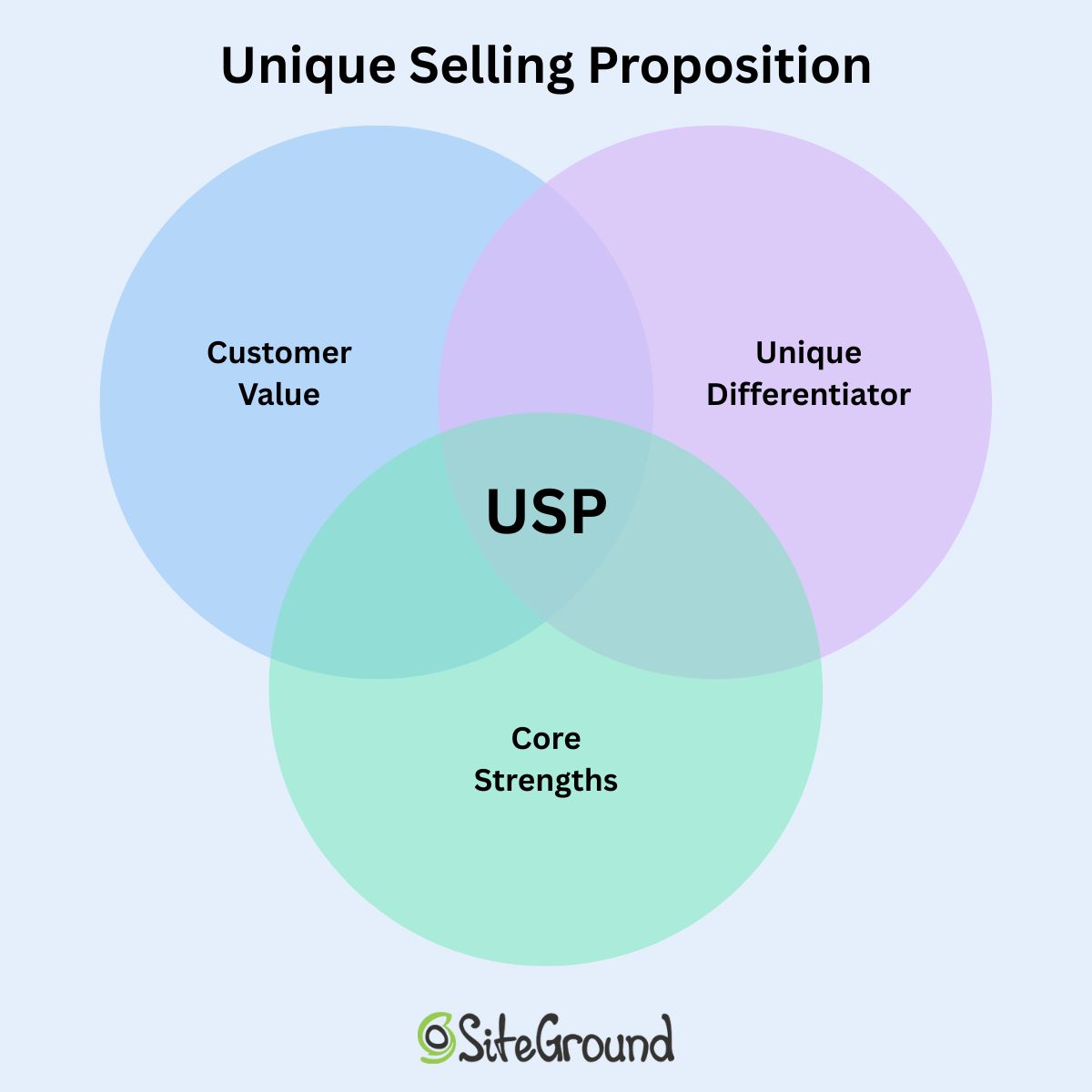
This strong USP isn’t just one clever line, though; it’s actually the outcome of a few core elements strategically working together. When these pieces click, your value becomes instantly clear to customers and harder for competitors (and, notably, AI tools) to replicate. So what are we talking about exactly? Here are the key components of a unique selling proposition:
- A Direct, Meaningful Customer Benefit: Your unique selling proposition must express value from the customer’s point of view. It should clarify the outcome, result, or improvement they gain, ensuring the benefit is something they actually care about and recognize as important.
- A Unique Differentiator: This highlights the specific way your product, service, or brand stands apart. It should show what you uniquely offer or do better than others—something identifiable, concrete, and relevant in your market.
- Core Strengths: The most resilient USPs build on your strengths—especially qualities competitors can’t easily imitate, such as your experience, processes, approach, relationships, or brand identity. These strengths help your USP remain distinctive and durable as the market evolves.
Pro tip: While not a separate component, clarity and specificity are essential qualities of any effective USP. Keeping your message simple, focused, and easy to understand ensures customers instantly grasp what makes your brand different.
How to Write a Unique Selling Proposition
A successful unique value proposition is built strategically from understanding your target audience, your market, and the unique value only you can provide. Here’s a structured approach that can help you build a strong USP, even as AI reshapes how successful businesses communicate.
Step 1: Know Your Target Audience
Before you can define what makes your brand unique, you need to know who you’re talking to and what outcomes or benefits they truly care about. This step is about uncovering your customers’ real needs, frustrations, and goals—it’s the “value proposition” that your product or service will deliver from their perspective.
Dig into:
- Real pain points and frustrations
- Complaints in reviews (yours and competitors’)
- Outcomes that matter most to them
- Emotional drivers (ease, confidence, speed, safety, reliability, identity)
Examples:
- Overwhelmed customers want simplicity
- Risk-averse customers want trust and proof
- Ambitious customers want speed and measurable results
End goal: Gain a clear understanding of the benefits that matter most to your target audience, so every later step—from differentiating yourself to crafting messaging—is rooted in the value your customers actually care about.
Pro tip: Plain and simple—interview your customers, in person, or via survey emails. Ask them these questions yourself. Use their responses to not only fine tune your messaging, but even your offering itself.
Step 2: Analyze Your Market & Competition
Once you understand your audience, look at what others are doing. Identify competitors, patterns, and gaps in the market. This step helps you find and articulate where you truly stand out.
What to look for:
- What competitors emphasize in their messaging
- What feels overused (“trusted,” “affordable,” “innovative”)
- Any strengths they play up—speed, quality, specialization, features
- Opportunities where customer needs aren’t being met
Ask yourself:
- Where does our product or service outperform others?
- What do competitors not offer or not execute well?
- Where do you have a competitive advantage?
- What aspects of our offering are difficult for others to copy—processes, expertise, relationships, or branding?
End goal: Identify where your brand can truly stand out by uncovering market gaps, spotting opportunities competitors aren’t addressing, and highlighting elements of your offering that are meaningful to your ideal customers.
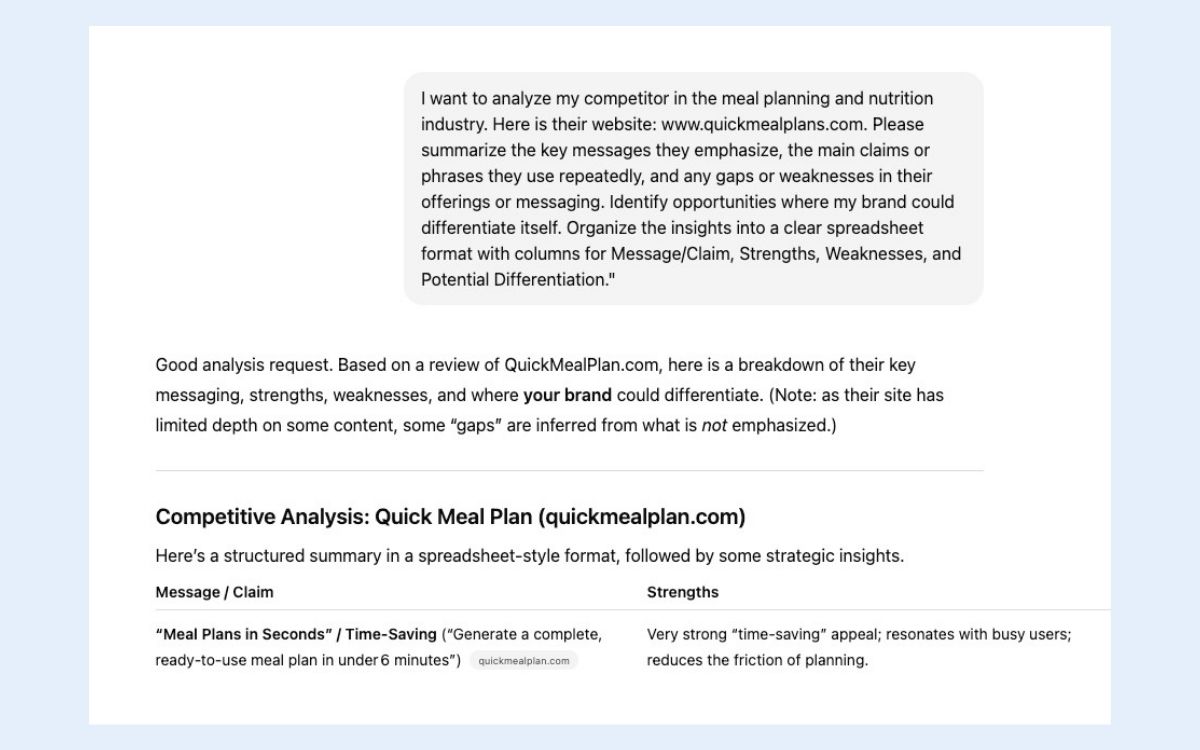
Pro tip: Don’t be shy about using ChatGPT for marketing, especially when it comes to competitor research. You can provide it with competitors’ websites, social media, or product pages and ask it to analyze patterns, spot gaps, or summarize strengths and weaknesses—giving you a faster, data-informed starting point for defining where you truly stand out.
Step 3: Identify What’s Hard to Copy
Not all advantages are equal. These days, competitors and AI can replicate features, claims, and content almost instantly, so the strongest USPs rely on core strengths that are genuinely unique and difficult to imitate.
Focus on:
- Expertise, experience, or specialized knowledge
- Proprietary tools, processes, or methods
- Exceptional customer relationships or personalized support
- Brand personality, philosophy, or story
- Community, ecosystem, or long-term trust
End goal: Pinpoint aspects of your offering that are truly original and hard to replicate, giving your unique selling proposition staying power and resonance in a crowded marketplace.
Pro tip: Ask yourself, “Could a competitor copy this overnight?” If yes, dig deeper until you find the part that’s distinctively yours.
Step 4: Craft Your AI-Proof Unique Selling Proposition
Now you bring together your customer benefit + differentiator + the thing that’s hard to copy.
A simple formula you can use:
“We help [audience] achieve [desired result] by providing [unique advantage].”
Unique selling proposition examples:
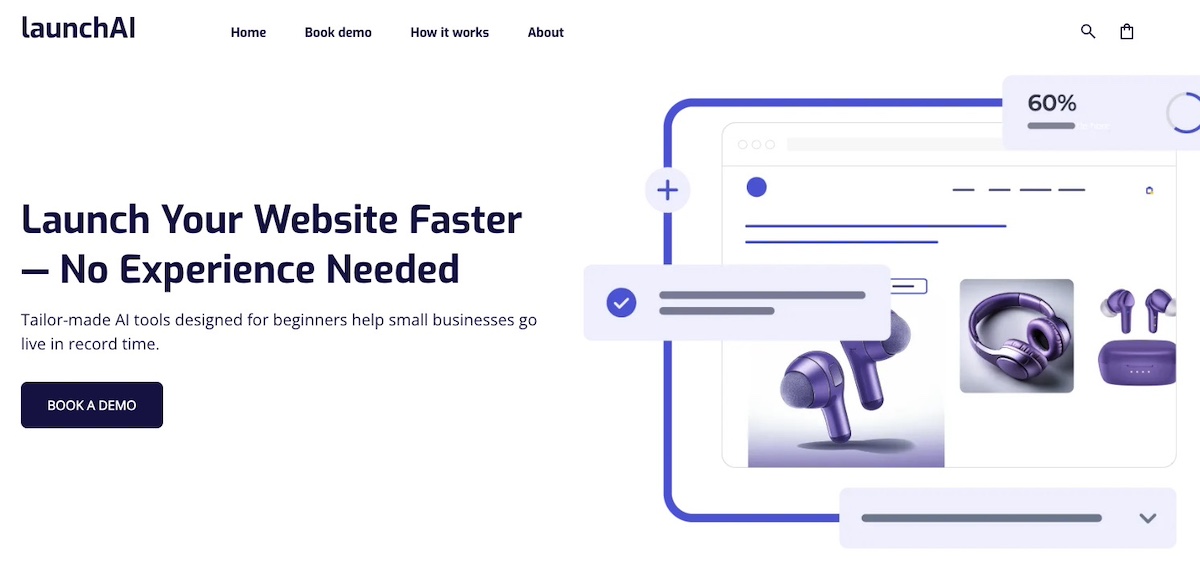
- “We help small businesses launch websites faster with tailor-made AI tools built for beginners.”
- “We help busy parents plan nutritious meals for their families in minutes using personalized meal plans created by certified nutritionists.”
- “We help busy ecommerce founders offload customer support using AI-powered workflows trained on their own brand voice.”
Tips:
- Keep it clear and concrete.
- Avoid generic claims.
- Highlight something competitors can’t easily mimic.
End goal:
Turn your value into a statement that’s simple enough to remember and strong enough to differentiate.
Pro tip: With the right ChatGPT prompts, you can absolutely use AI to help draft a first version of your USP. Think of it as a moldable starting point. Then refine it to highlight what’s truly unique, human, and hard to copy, making sure it resonates with your audience.
Step 5: Apply and Refine Your USP
Writing your unique selling proposition is only the first part of the process. To truly make it effective, you need to both integrate it across your messaging and continuously test and adjust based on customer feedback and market changes.
Where to use your USP:
- Website homepage design and product pages
- Ads, landing pages, and social media profiles
- Email subject lines and marketing campaigns
- Sales decks and customer onboarding materials
- Brand storytelling, videos, and About pages

How to apply it:
- Don’t just repeat your USP verbatim; weave its essence consistently throughout your messaging. Use your USP as the cornerstone of an integrated marketing approach, ensuring every touchpoint—website, social media, email campaigns, ads, and sales materials—communicates a consistent and compelling message.
- Reinforce it with examples, proof points, and customer-relevant outcomes.
- Make it the guiding principle behind your tone, style, and positioning.
How to refine it:
- Test messaging and track digital marketing metrics: A/B test ads and email subject lines.
- Gather customer feedback: Ask what stood out in their decision to buy.
- Monitor performance and competitor positioning regularly. (This is another area where you can lean on AI tools, such as by monitoring your business’s reputation.)
- Update the USP as needed to stay relevant, credible, and resonant.
End goal: Your USP becomes a living tool embedded in everything your audience sees, continuously validated, and sharpened over time to remain clear, distinctive, and meaningful.
If you want a simple way to put your USP into action, the SiteGround Website Builder makes it effortless. You can integrate your messaging across pages, track how your content performs, and refine it as you go—all without needing a developer. Plus, the built-in AI writer can help you craft on-point messaging on the fly. It’s an easy, intuitive way to keep your USP front and center while monitoring the results in real time.
Common USP Mistakes to Avoid in the AI Era
The rise of AI hasn’t changed what a USP is, but it’s absolutely changed the environment your USP lives in. Customers see more options, get answers faster, and can compare brands instantly. At the same time, competitors can spin up AI-enhanced products and polished copy almost overnight.
That’s why it’s essential to get your USP right: avoiding these mistakes makes your message as clear and impactful as possible.
1. Being Too Vague or Generic
Phrases like “high quality,” “great service,” “trusted,” or “innovative” all sound positive — but they don’t tell anyone how you’re different. AI-generated websites can produce these phrases at scale, which means they’ve never been more meaningless.
Why it matters now:
AI can produce generic “good-sounding” copy instantly. If your USP looks like something ChatGPT could create for any business in your industry, customers will skim right past it.
Stronger approach:
Replace broad traits with specifics customers can visualize or compare.
Successful unique selling proposition example: “Real human support, responding in under two minutes.”
2. Focusing on Features Instead of Outcomes
Many businesses fall into the trap of highlighting what their product has rather than what their customer gets. And in today’s AI environment, this is especially risky: AI tools can instantly generate polished feature lists for any competitor, making feature-level differentiation almost invisible.
Why it matters now:
- Competitors can replicate features quickly.
- AI-generated content makes every feature sound impressive.
- Customers scanning summaries see nearly identical capabilities.
The fix: Focus on outcomes, not features. Customers care about what your product does for them: saving time, reducing stress, boosting confidence, or achieving results faster.
Here’s what it looks like when you identify features and their outcomes:
- Feature: “AI-powered scheduling.” → Outcome: “Automatically schedule your week and save 10+ hours every month.”
- Feature: “Customizable nutrition plans.” → Outcome: “Eat healthier with meal plans tailored to your preferences and goals.”
- Feature: “AI chatbot responses.” → Outcome: “Resolve customer questions instantly without extra staff.”
Outcome-driven USPs cut through the AI-generated noise and connect directly to what really influences customer decisions.
3. Differentiating on Something AI Can Replicate Overnight
If your USP is built around something purely technology-based—especially generic AI functionality—it’s vulnerable. Competitors can adopt the same tools or generate similar claims in hours.
Why it matters now:
AI-driven features have a short life cycle. What feels cutting-edge today could be the industry standard tomorrow. A USP needs staying power.
Better approach:
Highlight the things AI can’t easily duplicate: expertise, community, proprietary data, personalized support, craftsmanship, long-term trust.
4. Not Writing AI language in Your Own Voice
Relying on AI-generated phrasing without adapting it to your brand’s voice can make your USP feel generic, robotic, and inauthentic. That’s because AI tends to favor certain words, phrases, and punctuation—like “cutting-edge,” “next-level,” “game-changer,” and em dashes. If you leave these untouched, your messaging can sound like every other AI-generated page out there.
Why it matters now:
People are becoming adept at spotting AI content. A unique selling proposition that reads like an algorithmic template may feel inauthentic, impersonal, or untrustworthy—even if the ideas are good.
Better approach:
Use AI to draft ideas, but actively weed out overused phrases and AI-favored constructions. Rewrite your USP in your own voice, making it sound human, genuine, and unmistakably your brand.
5. Creating a USP and Then Never Using it
A USP is only powerful when it consistently reinforces your brand story—across your homepage, ads, product pages, email marketing, social channels, and even your onboarding experience.
Why it matters now:
- SEO and AI—including search engines, shopping assistants, and chat-based recommendations—rely on signals pulled from your content.
- If your USP only appears in one place, AI tools may not recognize it as your core value, which can weaken your discoverability.
Better approach:
Use the USP as a guiding thread in your messaging, not a one-off statement.
Make Your Unique Selling Proposition Work for You
Your USP is more than a statement—it’s the guiding principle that keeps your brand distinct, human, and memorable amidst the AI noise. When you understand your audience, analyze your competition, and highlight what’s truly hard to copy, you can craft a USP that resonates and evolves alongside your business.
Turning your USP into a visible, actionable part of your website has never been easier. With the SiteGround Website Builder, you can integrate your core messaging seamlessly, track performance metrics, and continuously refine your site to ensure every page reflects the unique value you offer. And if your business includes selling online, SiteGround Ecommerce makes that easy by delivering a smooth, reliable buying experience that matches the value you’ve communicated from the start.




Comments ( 0 )
Thanks! Your comment will be held for moderation and will be shortly published, if it is related to this blog article. Comments for support inquiries or issues will not be published, if you have such please report it through our official channels of communication.
Leave a comment
Thanks! Your comment will be held for moderation and will be shortly published, if it is related to this blog article. Comments for support inquiries or issues will not be published, if you have such please report it through our official channels of communication.