Branding Basics: A Step-by-Step Guide to Building Your Brand
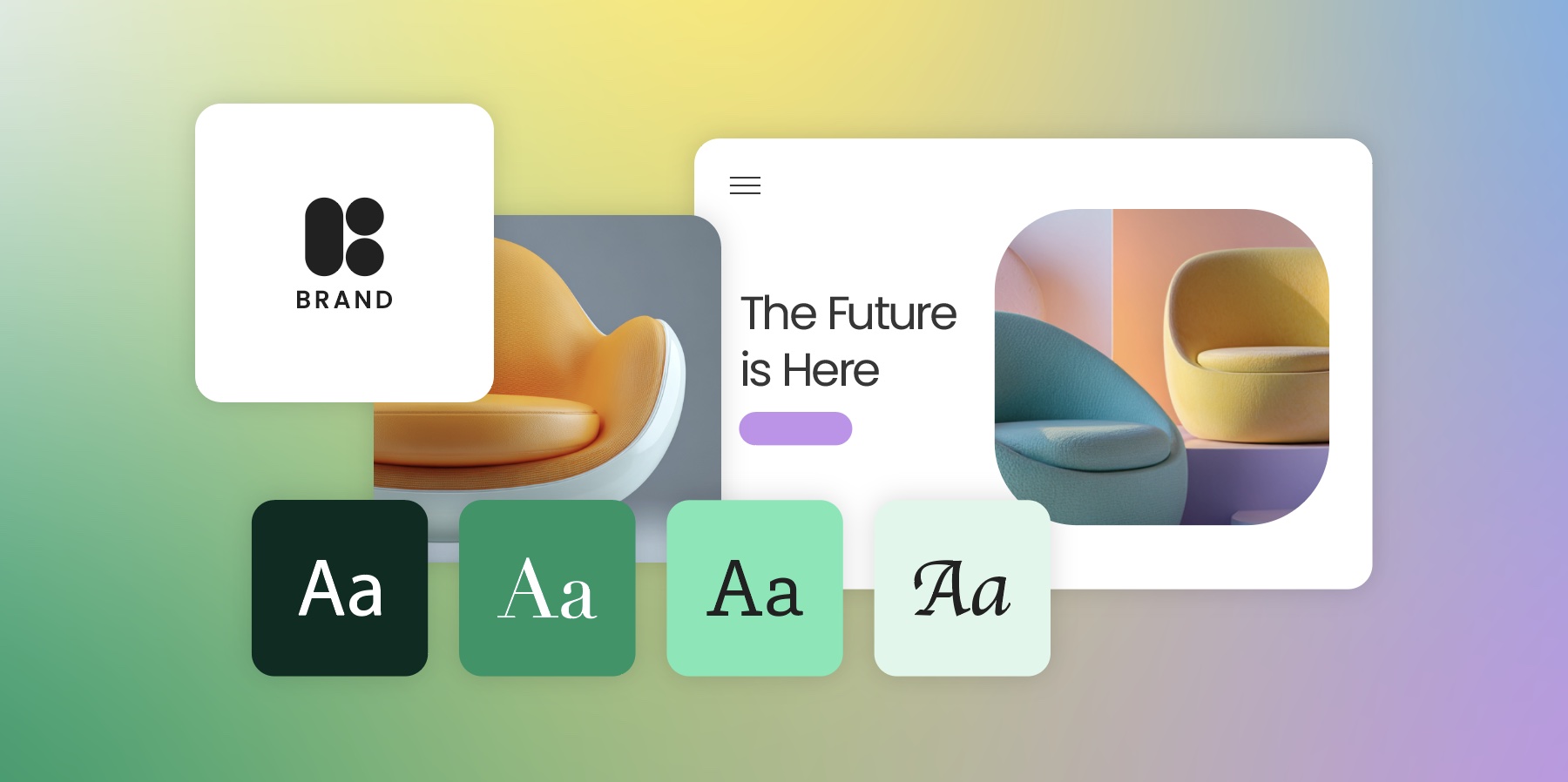
Did you know that a strong, memorable brand can multiply the value of your business? The power of branding goes far beyond just logos, colors, or slogans—it shapes how people perceive your business, drives decisions, and builds lasting value.
I’ve spent years working on branding from both sides of the table—first helping large corporations implement consistent, recognizable brands, and later building brands of my own for small businesses and startups. From strategy and design to marketing and messaging, I learned what it takes to make a brand stand out when resources are limited and every decision matters. Those lessons inform this guide, so you can approach your own brand with confidence.
Whether you’re launching something new or rethinking an existing identity, understanding branding basics helps you shape how people see, feel, and connect with your brand. This guide walks you through every step—from defining your mission to creating visuals and building consistency—so you can turn your idea into a recognizable, profitable, and successful brand.
Key takeaways:
- Branding is about shaping perception through every interaction—not just logos or visuals.
- A strong brand starts with a clear mission and a deep understanding of its audience.
- Consistent storytelling, voice, and visuals are what turn awareness into trust and loyalty.
- Brand guidelines ensure your identity stays cohesive as your business grows and evolves.
- The most successful brands are built intentionally, executed consistently, and refined over time.
What Is Branding
Branding is the practice of actively shaping how people perceive your business through every interaction, touchpoint, and message. It’s the overall impression your company leaves on customers and prospects—and, very importantly, the perception that sticks with them after. That means it’s much more than just your logo or color palette.
It goes beyond, including your visual identity, tone of voice, messaging, and even how you handle customer support. When done right, branding builds recognition, trust, and emotional connection—the foundation for long-term loyalty.
Why Branding Matters
But why really does it matter so much? Branding might seem like a “nice to have,” but in reality, it can make an absolutely massive difference, especially for entrepreneurs and small businesses. Effective branding builds recognition, communicates brand values, and creates trust, all of which can directly influence customer decisions and revenue.
Key reasons branding matters include:
- Builds trust and credibility with customers and partners.
- Differentiates you from competitors in a crowded market.
- Creates emotional connections that drive loyalty.
- Guides strategic decisions across products, marketing, and partnerships.
- Supports long-term growth as you scale your business while maintaining a recognizable, consistent identity.
- Contributes to brand equity: Companies with strong, well-recognized brands often command higher prices, attract loyal customers, and carry tangible financial value that can appear on the balance sheet.
Ultimately, good branding turns a business into a memorable, trusted, and valuable asset, one that strengthens relationships, drives revenue, and positions the company for sustainable success.
I’ve seen this firsthand in my own career—both working on branding for Fortune 500 companies and later building a premium consumer brand of my own. The difference between a product that people notice and one they overlook almost always comes down to branding—not budget. When a brand is thoughtfully built and consistently executed, it opens doors: partnerships, press, distribution, loyalty, and long-term value.
How to Build a Brand
As you’ve surely gathered by now, brand building isn’t as simple as creating a logo. To truly create a lasting and impactful brand, you must go through the process of defining, expressing, and refining who you are as a business. The steps below will help get you there, with a step-by-step plan for creating a brand that feels authentic, resonates with your target audience, and stands the test of time. Let’s jump on the branding bandwagon.
1. Identify Your Mission
Before we get started with colors and designs, we need to define the “why” behind your brand. This part is a really big deal, as every strong brand starts with a clear sense of purpose. That’s because your company’s mission defines why your business exists beyond making a profit—that is, what change you want to create, what need you meet, and what value you bring to your customers’ lives.
This clarity becomes the beating heart of your brand strategy, serving as the foundation for everything—from how you communicate to how you design. It ensures your messaging stays consistent and your decisions remain aligned as your business grows.
When I launched my olive oil brand, this step was pivotal. My goal wasn’t simply to sell a product; it was to help people understand what makes truly great olive oil—why sourcing matters, how harvest timing affects flavor, and what quality tastes like. That mission of education and appreciation shaped every decision afterward: the storytelling, the packaging, even the language on the bottle. Because the mission was clear and genuine, the rest of the brand flowed from it naturally.
If you’re unsure where to start with your brand, ask yourself:
- Why did I create this business in the first place?
- What problem am I helping people solve?
- What makes my approach different or better?
Once you’ve answered those questions, summarize your mission in one clear statement. For a kitchenware business, this could look something like: “We craft premium kitchen tools that help home chefs cook with confidence and flair.”
If you’re struggling to articulate this mission, don’t be afraid to turn to your favorite AI. For instance, with the right ChatGPT prompts, AI can help synthesize your thoughts so that you can come up with a clear and powerful mission statement.
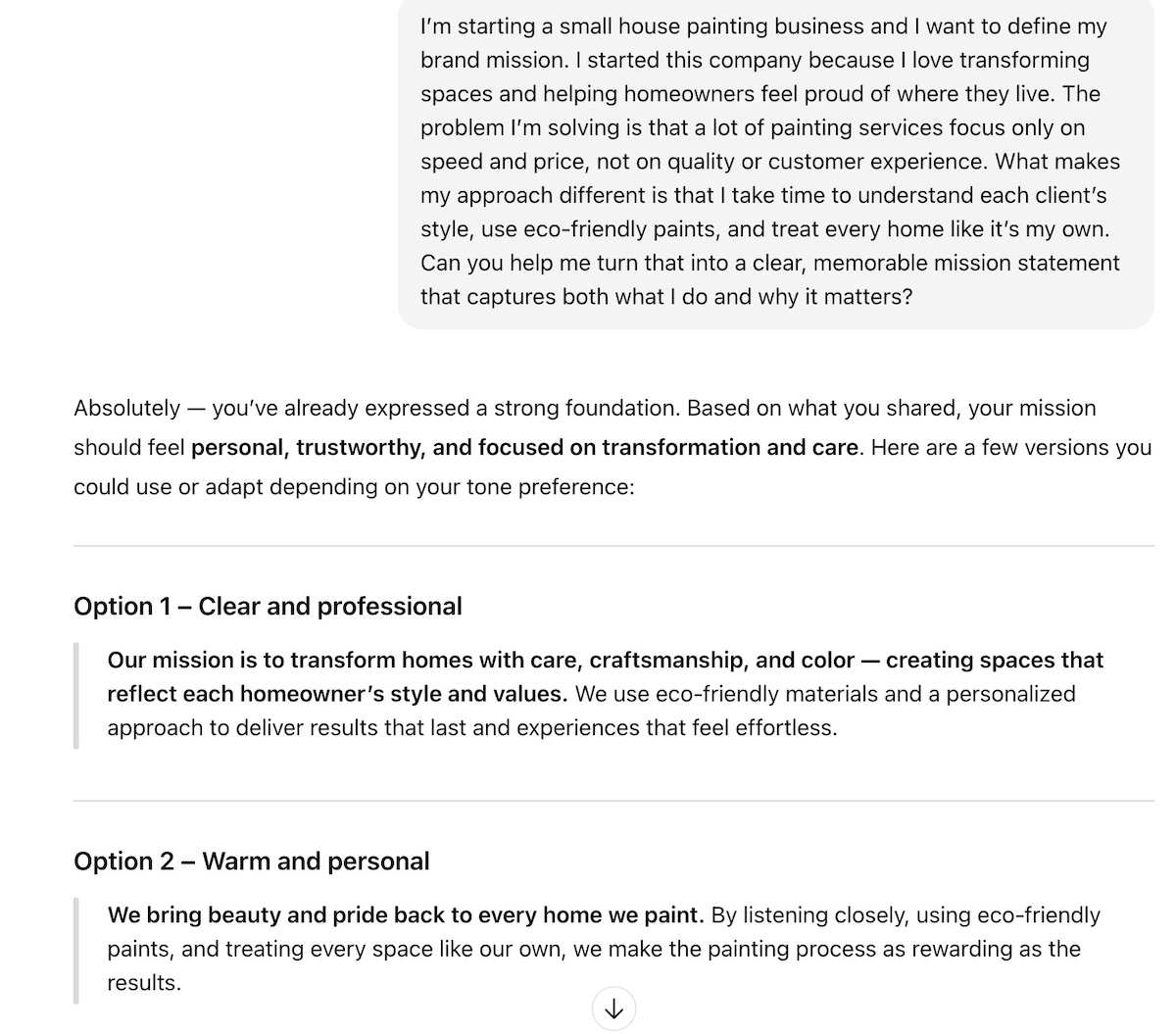
At the end of the day, keep it simple and authentic. Your mission should be easy to remember and easy to believe. It’s not marketing mumbo jumbo; it’s the heart and soul of your brand.
2. Define and Understand Your Audience
Once you know why your brand exists, the next step is understanding who it’s for. Your brand should speak directly to the people who will benefit most from what you offer. To do that effectively, you need to know them inside and out.
Start by identifying your ideal customer:
- Who are they (age, location, interests, lifestyle)?
- What challenges or frustrations do they face?
- What motivates their decisions—price, quality, convenience, values?
- How do they want to feel after engaging with your brand?
The goal isn’t just to define demographics but to understand mindset and emotion. The more clearly you picture your target audience, the easier it is to create messaging, visuals, and experiences that resonate.
One of the best ways to do this is to actually get to know your audience. Real insight doesn’t come from assumptions; it comes from listening. In my experience, that process has looked very different depending on the size of the business. When I worked with large corporate brands, we relied on structured research like surveys and focus groups to test messaging and understand customer needs. But when working with early-stage startups or building brands from scratch, we got much closer to the customer by interviewing people directly to uncover their frustrations, motivations, and what they wish existed in the market.
Those conversations don’t just validate your assumptions about your product and its brand, but in fact often reshape them. And that’s where real brand clarity comes from: not guessing what people want, but hearing it in their own words.
Once your audience becomes crystal clear, you can visualize your target customer by creating a simple buyer persona—a short description of a fictional but realistic example of your ideal audience. For instance:
“Freelancer Fiona is a 35-year-old designer who works remotely and relies on digital tools to stay organized. She values brands that save her time, simplify her workflow, and speak to her in a straightforward, professional tone.”
When you define and understand your audience, your branding shifts from being about what you want to say to what they need to hear.
Pro tip: As part of this process, think also about how your customer interacts with your brand from start to finish. Building a customer journey map can help you better understand who they are, what they need, and how your brand can meet them every step of the way.
3. Build Your Brand Story
Your mission defines why you exist, and your audience defines who you’re here for. Your story connects the two—showing how your purpose meets their needs, solves their problems, or makes their lives better.
A strong brand story isn’t a list of milestones or a marketing pitch. It’s an emotional thread that helps people feel what your brand stands for and why it matters.
What I’ve found again and again—both when building my own brand and when working with startups—is that this step becomes far more natural when you’ve really done the work in the previous two. When you’re clear on why you exist and who you serve, the story almost starts telling itself. It stops feeling like something you have to “craft” and instead becomes the way you genuinely talk about your business, because you’re rooted in purpose rather than a slogan.
To shape your story, focus on these elements:
- Origin: How did your brand begin? What inspired you to start?
- Purpose: What problem or need sparked your idea?
- Transformation: How do you make your customers’ lives better or easier?
Here’s a simple example:
“After a decade in big-agency PR, a communications strategist saw how smaller companies struggled to get noticed without huge budgets. She started her own boutique agency to change that—giving startups, small businesses, and entrepreneurs the same storytelling power as global brands. Her mission: to make great PR personal, strategic, and accessible.”
A great brand story acts as a bridge between who you are and who you serve. It helps your audience see themselves in your journey, and that connection is what turns awareness into loyalty.
4. Develop Personality and Voice
Your brand’s personality is how it feels to your audience—friendly or formal, bold or reassuring, playful or sophisticated. It’s what makes your brand memorable and relatable, setting the tone for every piece of communication you create. Just like in personal branding, your brand’s voice should sound like you—consistent, distinct, and aligned with your values.
To define your personality, think of your brand as a person. How would they speak? What kind of energy would they bring to a conversation? Use these questions to guide you:
- What three adjectives describe your brand’s character?
- How do you want customers to feel when they interact with you?
- What tone best fits your industry and your values?
Once you’ve defined your personality, translate it into a brand voice—the words, tone, and style that bring that personality to life. For instance, a real estate business with a confident, approachable personality might use conversational language and storytelling examples to simplify complex topics.
A consistent voice helps build trust, and by extension, your brand. Whether you’re writing a press release, social post, or email marketing, your audience should always recognize you.
When I was creating social media content and marketing emails for my own brand, I made a point of keeping the tone playful and approachable—almost as if I were speaking to a close friend. This wasn’t random; we knew our target audience well, and that kind of voice felt authentic to them and helped build a genuine connection.
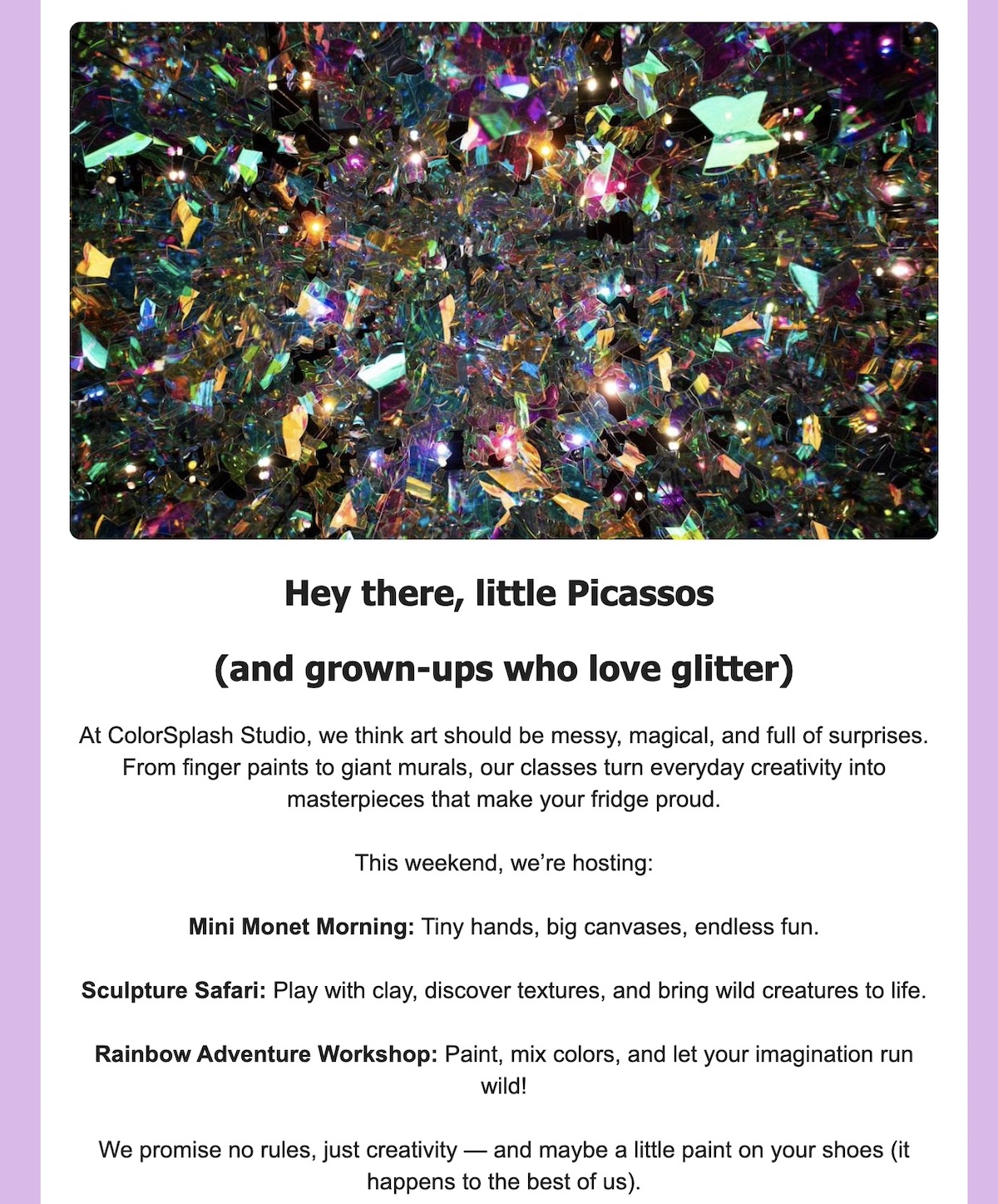
One of the most important ways to put your brand voice into action is through email marketing. Tools like SiteGround Email Marketing make it easy to stay consistent, no matter the audience or channel. The built-in AI writer can help you craft copy that fits your tone perfectly—whether you’re looking for something neutral, promotional, professional, or social-media specific. This ensures your content reflects your personality and strengthens your brand with every send.
5. Create Visual Identity
Your visual identity is what makes your brand instantly recognizable. It includes the colors, fonts, imagery, and other design elements that communicate who you are and what you stand for. But, importantly, it’s not just about looking good! It’s about creating a cohesive visual language that reflects your personality and brand values at a glance.
That’s right: a cohesive and consistent visual identity creates brand recognition across every touchpoint, from your website to social media to marketing materials. Thinking about your brand holistically like this ensures all elements work together to express your personality clearly and consistently.
When your visual identity grows out of a brand you’ve taken the time to understand deeply, the design becomes more than decoration, and becomes shorthand for your values and story. In my own career, building both my brand and brands for early-stage startups, the visual process became far easier and much more authentic when we first got clear on who we were serving and why. Once that foundation was in place, the visuals weren’t guesses or random style choices, but instead became extensions of our story and purpose.
With that in mind, these are the branding elements you’ll want to focus on:
Logo: Your logo is the centerpiece of your brand, but what’s most important is designing it with your entire brand in mind. Before diving headfirst into logo creation, contemplate the full picture, including the other elements listed below.
Also consider how and where your logo will be used—on your website, email headers, social media profiles, printed materials, merchandise, and even as a tiny favicon in a browser tab. Planning for all these applications ensures your logo works everywhere and aligns with your overall brand.
Color palette: Choose colors that reflect your brand’s mood and values. Many brands use a system of primary, secondary, and even tertiary colors: primary colors define your brand at a glance, secondary colors complement and support the primary palette across marketing materials and digital channels, and tertiary colors can be used sparingly for accents or special campaigns, adding depth without diluting your identity.

Typography: Your fonts should align with your brand’s tone—for example, modern and clean for tech, classic and elegant for luxury, or bold and friendly for lifestyle brands. Many brands choose two main fonts: one for headlines to grab attention and convey personality, and another for body copy to ensure readability.
Imagery and graphics: Define your photography and illustration style. Are your visuals polished and professional, or candid and authentic? Also pay attention to color tones, lighting, and composition so that your imagery has a consistent mood and brand style.
Brand elements: Consider supporting design elements like icons, textures, or patterns that can reinforce your style.
If you’re unsure how to define these elements, tools like ChatGPT or other AI can be a helpful resource. By providing details you’ve already clarified—such as your mission, audience, and brand personality—ChatGPT can suggest ideas for color palettes, fonts, and other design elements. You can even use ChatGPT to create a website, helping you implement your brand consistently across your content.
6. Produce Brand Guidelines
Once you’ve settled on these elements, remember that the key to successful branding isn’t just creating a beautiful brand—it’s being consistent with it. When your visuals, voice, and messaging align across your web design, social media, packaging, and marketing materials, they reinforce your identity and make your brand more memorable.
Brand guidelines help make this happen. They act as a manual for your brand, allowing anyone—whether on your team or external partners—know exactly how to execute your brand, and equally important, how not to. They don’t just document the elements we’ve covered above, but they also provide concrete examples of correct and incorrect usage.
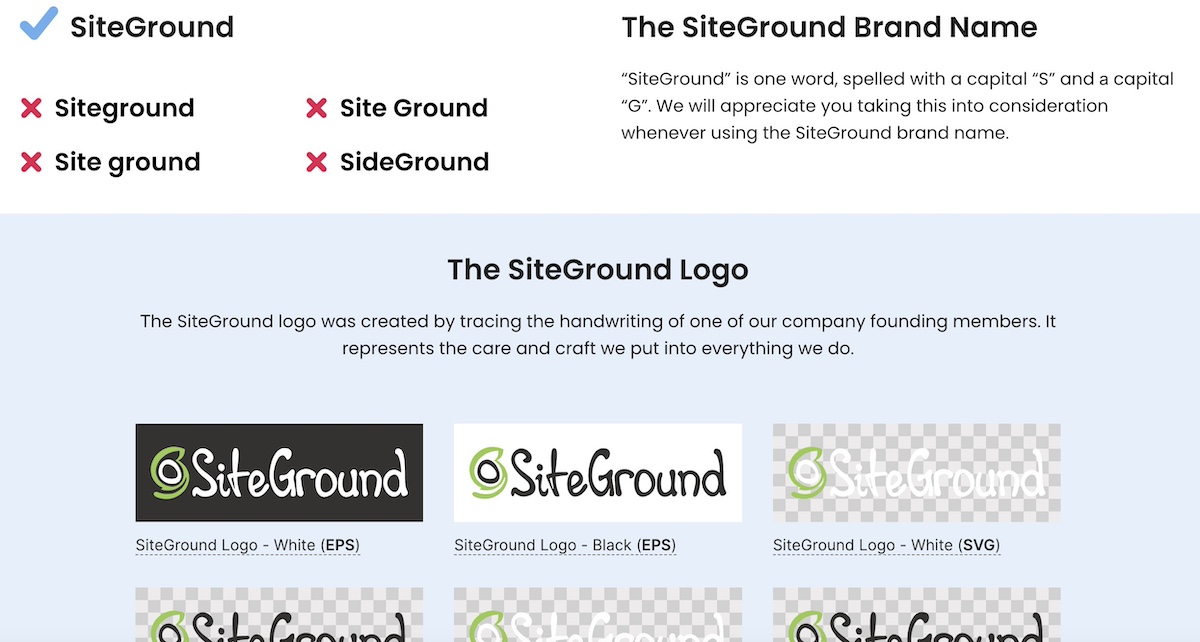
During my years managing brand strategy for a large corporation, I learned that true brand building means letting guidelines become your watchwords. So much so that, many years later, I still remember our main pantone color code—PMS 208!—because it was ingrained in every project and interaction. That precision and consistency is what builds and maintains brand equity.
Even for small businesses, the lesson holds: treat your brand like it matters, and it will. Well-crafted guidelines make it possible to uphold that consistency, so your brand stays cohesive, professional, and memorable no matter who is communicating it.
This level of detail is oh so important. That is, to build a strong, recognizable brand (and even protect it legally), you need to be meticulous about maintaining consistency across every interaction. Well-crafted guidelines make it easier to uphold that consistency, so your brand stays cohesive, professional, and memorable no matter who is communicating it.
7. Implement Branding
Defining your brand is of course only the first step in brand building; the real impact comes from applying it. So now it’s time to use your newly created guidelines to really bring your brand to life.
This is where consistency truly pays off. When I launched my own brand, I didn’t have a massive marketing budget, but every detail—from packaging and website to social media visuals and tone of voice—was carefully aligned. That consistency helped our brand stand out, getting noticed by major retailers and featured in high-profile national magazines and newspapers, and even landing coverage on the news. It proved that when your brand is cohesive and thoughtfully executed, it can generate recognition and credibility that no budget alone can buy.
Here are some ways to put your branding into action:
- Packaging and physical materials: If you have tangible products, make sure packaging, labels, and even shipping materials reflect your brand.
- Presentations and documents: Use consistent branding in slides, PDFs, and internal/external documents.
- Team alignment: Make sure employees and contractors understand your brand guidelines and the value of following them. When your team knows why consistency matters, they’re better able to represent the brand accurately and maintain its impact across every interaction.
- Advertising campaigns: Apply your brand strategy consistently in paid ads, both online and offline, so your brand messaging and visuals are instantly recognizable.
- Create templates for social media marketing: Ensure your posts, graphics, and captions consistently reflect your colors, fonts, and tone of voice.
- Implement branding in email marketing: Use consistent visuals, messaging, and layouts in all your campaigns so subscribers immediately recognize your brand.
- Reflect your brand on your website: From colors and fonts to imagery and messaging, every website page should reinforce your brand identity.

8. Evolve With the Times
Even the strongest brands aren’t meant to stay frozen in time. As your business grows, your audience shifts, or the market evolves, your brand should adapt too—but always with intention. The goal isn’t to reinvent yourself every year, but to refine and refresh in ways that keep your brand relevant while preserving what makes it recognizable.
From my experience working for a large, time-tested corporation in Silicon Valley, brand refreshes were sometimes necessary to stay current. We approached this by working closely with designers to identify the most valuable elements of the brand—the elements that audiences instantly recognized—and keeping those as a guiding thread in the refresh. The result was a brand that felt modern and upgraded, but was still just as recognizable as before.
This approach applies to any brand: evolution doesn’t mean starting from scratch. It means maintaining the essence of who you are—your mission, values, and overall feel—while updating the elements that help you stay current. Maybe your logo becomes simpler, your color palette more modern, or your messaging more attuned to your audience’s current mindset. But the throughline should always remain: your audience should feel that it’s still you, just a sharper, more confident version.
If you handle it thoughtfully, evolution strengthens brand equity and reinforces brand recognition, helping your brand feel both familiar and forward-thinking.
From Strategy to Reality: Branding Basics in Action
When all is said and done, a strong brand only works when it’s built thoughtfully and implemented consistently. Every decision—from messaging and visuals to customer interactions—should reflect the brand identity you’ve carefully defined. With that, you can project a brand that resonates with your audience and becomes a lasting, recognizable asset.
The SiteGround Website Builder makes it easy to bring your brand to life online. With customizable templates, built-in design tools, and full control over colors, typography, and layout, you can apply your visual identity seamlessly across every page. Whether you’re launching your first site or refreshing an existing one, it helps ensure your brand feels cohesive, polished, and uniquely yours from the moment visitors land on your homepage.







Comments ( 0 )
Thanks! Your comment will be held for moderation and will be shortly published, if it is related to this blog article. Comments for support inquiries or issues will not be published, if you have such please report it through our official channels of communication.
Leave a comment
Thanks! Your comment will be held for moderation and will be shortly published, if it is related to this blog article. Comments for support inquiries or issues will not be published, if you have such please report it through our official channels of communication.